
The Crucible of Innovation: African AI Success Stories
The African continent is rapidly emerging as the next significant frontier for technological innovation, moving beyond mere digital adoption to become a powerhouse of deep-tech creation.
Artificial Intelligence (AI) serves as the primary engine for this transition, where pervasive social and economic needs drive problem-solving that results in globally competitive technologies.
This strategic deployment of AI is estimated to inject a staggering USD 2.9 trillion into the African economy by 2030, underscoring the immense financial potential.1
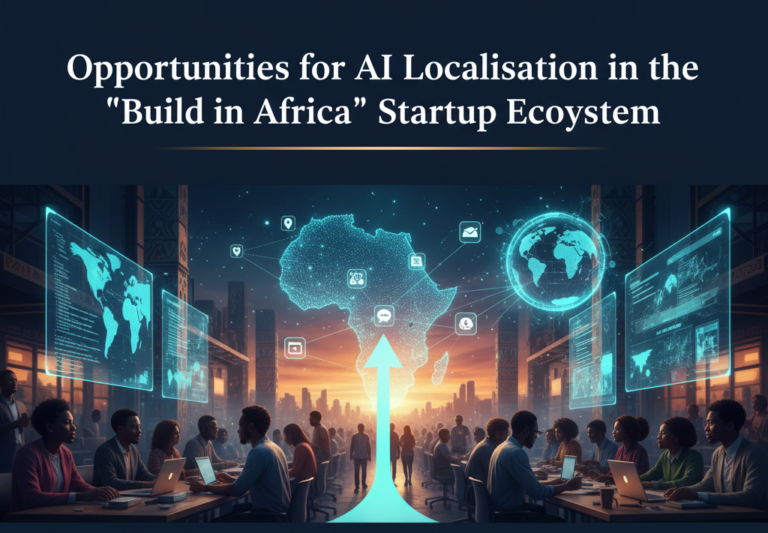
The defining narrative for this burgeoning ecosystem is the “Build in Africa” mandate, a concept that transcends simple market localisation. It represents a determined strategic effort to achieve technological sovereignty.2
African founders are leveraging inherent constraints, such as data scarcity, infrastructural fragmentation, and limited computational resources, to engineer hyper-optimised, resilient, and inherently scalable solutions.
These foundational models, built to function effectively under duress, hold a critical advantage when deployed in other complex emerging markets worldwide.
African AI success can be categorised into three distinct vectors:
- Global IP Export, exemplified by InstaDeep’s groundbreaking acquisition in the BioTech sector;
- Industrial ROI, demonstrated by DataProphet’s quantifiable impact in traditional manufacturing; and
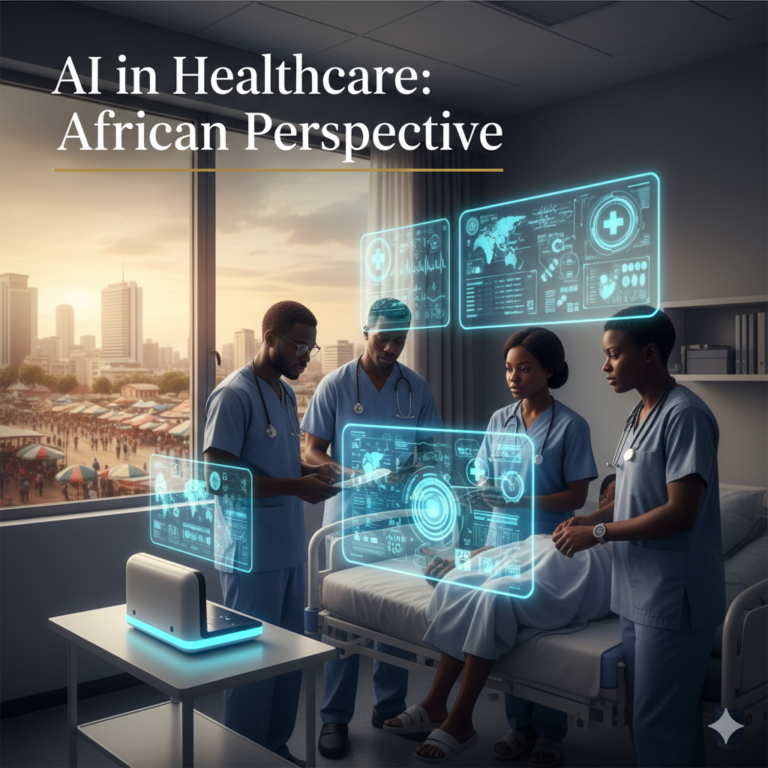
- Hyper-Local Impact, represented by companies like YeneHealth and TOLBI, which bundle technology with essential services to address systemic human development challenges.
The maturation of the African AI ecosystem, supported by continental strategy and foundational infrastructure initiatives, confirms that the continent is ready to move from a consumer of global technology to a shaper and owner of its own technological destiny.2
Strategic investment must, therefore, be directed not only towards scalable market applications but also towards addressing the foundational barriers, particularly compute capacity and data equity, to guarantee Africa’s long-term competitive position.
Defining the ‘Build in Africa’ Imperative: Innovation Under Constraint
From Consumer to Creator: The Sovereignty Mandate
The conversation surrounding African technology has decisively shifted from focusing on mobile adoption to prioritising indigenous creation.
African leaders and entrepreneurs are increasingly demanding that the continent move beyond merely adopting foreign AI solutions to actively creating and owning the underlying technological infrastructure and intellectual property.2
This demand is encapsulated in the African Union’s inaugural Continental AI Strategy, which endorses an “Africa-centric, development-focused approach to AI, promoting ethical, responsible, and equitable practices across the continent”.3
This move towards technological ownership legitimises the investment landscape by establishing a high-level policy framework that reduces regulatory uncertainty for international financial partners.
The regional ecosystem is actively fostering the required environment for deep-tech growth. The rise of specialised technology clusters, such as Novation City in Sousse, Tunisia, illustrates a concerted effort to promote cross-border AI collaboration.
By hosting events like the Global AI Congress Africa (GAICA 2025), Sousse has briefly become a continental centre for ambitious technological conversations, showcasing Africa’s growing creativity and confidence in artificial intelligence.4
The objective of such initiatives is to unite the continent’s brightest minds, strengthen collaboration, and accelerate market access and investment opportunities across Africa, positioning hubs like Novation City as continental centres for advanced technology.5
The Dynamics of Innovation Under Constraint
African AI startups operate under unique systemic pressures, including tight budgets, limited access to high-quality labeled data, and intense competition for global AI talent.6
Rather than serving as insurmountable hurdles, these constraints compel a level of creativity and engineering resilience that becomes the primary source of competitive advantage.
Solutions built in Africa are inherently tailored to local operational realities, making them robust and efficient in complex environments:
- Low Bandwidth Design: Recognising that internet access remains patchy across much of the continent, AI products must be engineered to function efficiently, often requiring offline capabilities or minimal data transfer.6
- Cultural Relevance and Linguistic Localisation: To ensure widespread adoption and trust, AI systems must be culturally and linguistically aware. Language localisation is a visible priority, ensuring effective engagement and preventing technological bias.6
- Data Sovereignty: Amid global concerns over privacy and data export, African startups increasingly recognise that keeping data local and secure offers a powerful competitive edge.6
The necessity of “innovation under constraint”, building models that are resilient to low bandwidth, data scarcity, and high fragmentation, results in solutions that are intrinsically superior when deployed in other complex emerging markets (e.g., Southeast Asia or Latin America).
If an agricultural prediction model, such as those used by TOLBI, can achieve dramatic results using sparse satellite imagery and noisy data in rural Senegal 8, it is likely far more adaptable than models trained exclusively on rich, clean datasets found in Western markets.
This resilience in model performance is, in effect, the ultimate exportable intellectual property.
Investor Expectations: Scaling Locally, Thinking Globally
While the focus remains on solving local problems, venture capital demands a clear path to global scalability. Investors often urge founders to “build for Africa,” yet simultaneously require them to demonstrate the capacity for rapid expansion across regions and globally.9
The requirement is not merely for adoption but for creating a business model rooted in solid unit economics that solves fundamental problems for customers who can afford the solution, irrespective of their location, whether in Africa, Europe, or America.9
This perspective reframes African AI. It is not merely a philanthropic or development-focused endeavour; it is a source of proprietary, robust intellectual property designed to function successfully in the world’s most challenging operational environments.
Founders are expected to think globally from day one, leveraging their local context to create systems that are engineered for maximum reliability and scalability across diverse regulatory and infrastructural landscapes.9
The diversity of success across key sectors such as Fintech, Healthtech, and Agritech, validates that Africa is ripe for investment.10
Success stories like Flutterwave, an African fintech unicorn, further substantiate the high potential of startups addressing fundamental economic needs.10
Case Study 1:
The Global DeepTech Pioneer (InstaDeep, Tunisia/Global)
The acquisition of InstaDeep stands as the definitive global validation point for African-originated deep-tech and AI intellectual property.
It is the clearest evidence that technological excellence built on the continent can command top-tier international valuation and strategic interest.
Foundation and Strategic Pivot
InstaDeep was co-founded in 2014 by Karim Beguir, a mathematician, and Zohra Slim. Initially a web design company, the firm strategically pivoted to focus on deep-tech AI in 2017.11
The founders aimed to build a globally competitive enterprise by hiring talent in Africa.11 InstaDeep leveraged advanced techniques, including DeepMind’s reinforcement learning (RL) approach, applying them to solve complex, century-long industrial problems, such as protein folding and logistical optimisation.11
The company developed major branded products focused on complex, high-value industrial and scientific applications: DeepChain™, an AI-based protein design system engineered to speed time to market for new drugs, and DeepPCB, an AI-powered printed circuit board routing system.11
Leveraging its expertise in GPU-accelerated computing, deep learning, and reinforcement learning, InstaDeep established crucial collaborations with global leaders in the AI ecosystem, including Google DeepMind, Nvidia, and Google Cloud.13
Strategic Validation: The BioNTech Acquisition
InstaDeep’s success culminated in a landmark transaction that put African AI on the global map. Building on a multi-year strategic collaboration, which included the formation of an AI Innovation Lab in 2020, BioNTech acquired InstaDeep.14
In 2023, BioNTech acquired 100% of the remaining shares of InstaDeep for approximately $700 million USD (the upfront consideration was roughly £362 million in cash and BioNTech shares).15
This was the largest-ever acquisition for an African deep-tech company.16 The strategic rationale was clear: the acquisition enabled BioNTech to create a fully integrated, enterprise-wide capability to discover, design, and develop next-generation immunotherapies at scale, leveraging InstaDeep’s artificial intelligence and machine learning technologies across BioNTech’s platforms.13
The Export of African IP and Talent
The acquisition confirms that Africa is a valid locus of AI innovation for both talent and investors.16 InstaDeep’s success in fields as demanding as drug discovery, a complex, high-margin domain, serves as definitive proof of concept for global AI investors.
It signals that African deep-tech ventures can deliver proprietary, foundational intellectual property that warrants significant strategic acquisition multiples.
The transaction has effectively de-risked the African deep-tech segment. Prior to this, investment in highly complex AI solutions originating from the continent was often perceived as high-risk.
A near $700 million acquisition by a pharmaceutical giant validates the high-end valuation model for complex IP originating from Africa, shifting investor perception from solely focusing on market consumer base to technical competence and proprietary model development, thus accelerating interest in subsequent deep-tech funding rounds.
The company’s co-founder, Karim Beguir, an advocate for democratising AI 17, has actively supported the development of local talent pipelines through steering committee involvement in initiatives like Deep Learning Indaba.12
The following table provides a comparison of the key success stories across different sectors, illustrating the breadth of achievement:
Table 1: Flagship African AI Case Studies: Scale and Validation
| Startup (Country) | Sector Focus | Core AI Technology | Key Financial/Strategic Milestone | Source |
|---|---|---|---|---|
| InstaDeep (Tunisia/Global) | DeepTech/BioTech | DeepChain™ (Reinforcement Learning for Protein Design) | Acquired by BioNTech for approx. $700M USD (Largest African deep-tech acquisition) | 13 |
| DataProphet (South Africa) | Industry 4.0/Manufacturing | Prescriptive ML (OMNI/PRESCRIBE) | $10M Series A (Led by Knife Capital for global expansion) | 18 |
| YeneHealth (Ethiopia) | HealthTech/FemTech | AI-driven Telehealth, E-pharmacy, Data Analytics | Winner, Africa Fintech Summit 2025; Ethiopia’s first FemTech leader | 20 |
| TOLBI (Senegal) | AgriTech/ClimateTech | Precision Agriculture (AI & Satellite Imagery) | Proven yield increase (200%+) for cashew farmers | 8 |
Case Study 2:
Revolutionising Industry with Quantifiable Returns (DataProphet, South Africa)
DataProphet, based in South Africa, exemplifies how African AI companies are achieving success by delivering measurable, verifiable financial returns in the traditionally conservative world of heavy industry and manufacturing.
Their model relies on prescriptive AI, ensuring that their solutions translate directly into substantial, quantifiable ROI for their clients.
Mastering Industry 4.0 with Prescriptive AI
Established in 2014 by Frans Cronje and Daniel Schwartzkopff, DataProphet is a global AI provider specialising in solutions for Industry 4.0, focused on improving quality and yield in manufacturing.18
The company was recognised by the World Economic Forum as a Tech Pioneer due to the real-world impact of its prescriptive AI.23
Their flagship solution, OMNI (encompassing PRESCRIBE), is a unique deep learning system that combines predictive and prescriptive machine learning models.24
While predictive models merely forecast defects, DataProphet’s PRESCRIBE solution goes further, prescribing optimal plant control parameters and enabling operators to actively remedy potential defects and errors before they occur.24
This proactive approach is specifically designed to reduce the production risk involved with complex, multi-step industrial processes.19
Concrete, Quantifiable ROI Profile
The success of DataProphet is substantiated by verifiable operational improvements and financial savings for major international clients, particularly in the automotive and foundry verticals.24
- Cost Reduction in Automotive Manufacturing: At a large automotive assembly plant in South Africa, DataProphet successfully applied its OMNI solution to detect and significantly reduce spot welding defects. This intervention achieved a monthly saving of $475,000 USD on downtime alone.24
- Non-Quality Cost Elimination: Across their customer base, the deep learning solution frequently reduces the cost of non-quality by more than 50 percent through a customised single model approach.25
- Time-Saving Inspections: DataProphet also addressed the need for accelerated quality control procedures by developing OMNI|Vision, a cutting-edge visual quality control solution built on advanced modern object detection technology that avoids traditional template matching.24
DataProphet’s ability to deliver guaranteed, measurable financial returns successfully overcomes the institutional scepticism often found in heavy industry globally.
Achieving high-value metrics, such as near half-a-million-dollar monthly savings and halving non-quality costs, serves as a powerful validation mechanism for their technology.
By solving complex, data-heavy manufacturing problems effectively from a South African operational base, DataProphet establishes the continent as a mature leader in industrial AI, directly challenging incumbent providers in more established global manufacturing markets.
Global Expansion and Strategic Alliances
The commercial success of DataProphet allowed the company to raise $10 million in its Series A investment round.19
This funding, led by Knife Capital, was explicitly intended to accelerate the company’s international expansion, confirming that its technology is viewed as industry-leading and globally scalable.19
The company has built a strong international presence through strategic partnerships, including an alliance with the Norican Group, a leading machine builder for foundries, since 2020.23
Furthermore, DataProphet has demonstrated its global applicability by successfully replicating its solutions in other emerging markets, such as its partnership with Kaitronn in Brazil to optimise industrial processes and beneficiation plants in that region.27
Their strategic collaboration with Mercedes-Benz on advanced manufacturing solutions further solidifies their standing as a global provider.26
The following table juxtaposes the quantifiable operational metrics delivered by these market leaders:
Table 2: Quantifiable Impact Metrics: Proving ROI
| Startup | Sector | Metric of Success | Quantifiable Result | Source |
|---|---|---|---|---|
| DataProphet | Manufacturing | Monthly Downtime Cost Reduction | $475,000 USD saved per month (single automotive plant) | 24 |
| DataProphet | Manufacturing | Cost of Non-Quality Reduction | Frequently reduces costs by more than 50 percent | 25 |
| TOLBI | AgriTech | Agricultural Yield Improvement | Increased yields by over 200% in certain cases (cashew farmers) | 8 |
| YeneHealth | HealthTech | Access and Affordability Improvement | Integration of e-pharmacy, telehealth, and micro-loans to overcome cost barriers and stigma | 20 |
Case Study 3:
AI for Human Development and Resilience
While the economic impact of deep-tech acquisition (InstaDeep) and industrial efficiency (DataProphet) is crucial for validating the African AI landscape, the most profound necessity-driven innovation occurs in critical sectors like healthcare and agriculture, where AI is used to address systemic human development gaps.
HealthTech: Bridging Gaps with YeneHealth (Ethiopia)
YeneHealth, Ethiopia’s first leading FemTech startup, was founded by Kidist Tesfaye to address the immense challenges Ethiopian women face in accessing affordable, reliable health services, particularly reproductive, maternal, and mental healthcare.20 These challenges are compounded by high costs, geographic constraints, and social stigma.28
The startup’s solution is an integrated digital ecosystem, a web and mobile app that places women’s health at its centre.
It leverages AI and data analytics for features such as menstrual cycle and pregnancy monitoring, symptom tracking, and virtual consultations with verified health professionals.20
Crucially, YeneHealth’s localisation strategy involves bundling its core technology with solutions that overcome systemic infrastructural hurdles:
- Integrated Finance and Logistics: The platform incorporates an e-pharmacy enabling discreet home delivery of pharmaceutical products, addressing issues of stigma and last-mile logistics. Furthermore, it offers micro-loans to help overcome the cost barriers associated with essential medicines, which are often unaffordable for lower-paid workers.28
- Cultural Sensitivity: The company ensures cultural relevance by providing culturally sensitive digital-educational content in multiple languages, fostering a safe environment for women to seek health advice.20
YeneHealth’s victory at the Africa Fintech Summit 2025 highlights the market validation for these integrated health and finance solutions.20
Its necessity-driven model, solving for technology, finance, and logistics simultaneously, demonstrates a higher level of sophistication than typical single-focus healthtech solutions built for mature, infrastructure-rich markets.
AgriTech: Climate Resilience with TOLBI (Senegal)
In agriculture, African AI startups are transforming food systems by enhancing productivity and promoting sustainability.10
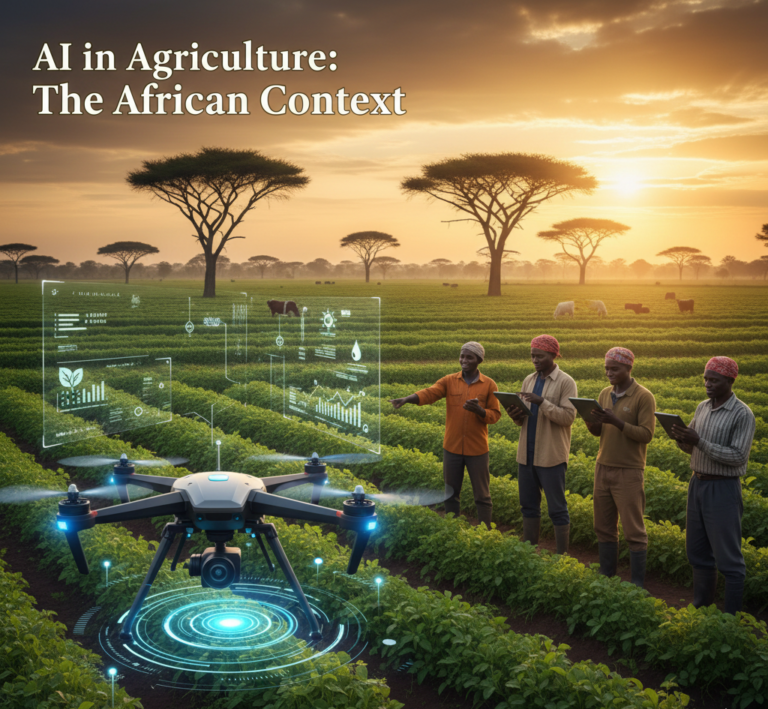
TOLBI, based in Senegal, provides a precision agriculture solution that addresses resource efficiency and climate adaptation, empowering sustainable agriculture across the continent.22
TOLBI leverages AI and remote sensing (satellite imagery) to gather real-time data and provide smallholder farmers and agribusinesses with hyperlocal insights into weather patterns, irrigation requirements, soil health, and crop yields.22
This information is translated into customised advice on the optimal amount of water and fertiliser needed daily, as well as the best planting and harvesting dates to maximise yields while minimising climatic hazards.29
The impact is substantial and direct: by optimising critical inputs, farmers can boost productivity and income while complying with sustainability regulations.
For instance, cashew farmers who utilised TOLBI’s recommendations have experienced yield increases exceeding 200% in some cases.8 This success demonstrates a highly scalable economic and environmental impact, supporting the development of sustainable, net-zero emissions supply chains in agriculture.8
The success of companies like YeneHealth and TOLBI confirms that successful African AI ventures thrive by adopting integrated, multi-modal solutions.
These companies are forced to bundle technology (AI/data analytics) with finance (micro-loans) and logistics (discreet delivery) to overcome systemic socio-economic barriers.
This necessity for end-to-end service provision creates highly sophisticated business models that are inherently resilient and act as pioneers in scalable integrated digital service delivery for emerging economies globally.
Scaling the Ecosystem: Strategic Requirements for Future Success
The long-term prosperity and technological sovereignty of the African AI ecosystem depend on overcoming two primary infrastructural hurdles: the representational data gap and the computational resource deficit.
The Critical Data Sovereignty and Representation Gap
Data is the lifeblood of AI. However, a significant portion of the data used globally to train foundational AI systems does not accurately reflect the African experience, leading to inherent algorithmic bias and models that fail to address the continent’s specific needs or perpetuate existing inequalities.30
Compounding this, the scarcity of computational resources and local datasets remains a significant hurdle impeding the deployment of effective AI tools.31
Recognising this existential threat to inclusive AI, the ecosystem is mobilising to close the gap. Initiatives such as the Deep Learning Indaba’s Call for African Datasets are actively aiming to create a robust repository of high-quality, African-relevant data spanning languages, cultures, environments, and challenges.30
This effort is vital for empowering local developers to create solutions that are contextually relevant and impactful.30
Furthermore, specialised research is addressing the linguistic diversity challenge. Microsoft Research Africa is pioneering advancements in Generative AI, specifically focusing on Large Language Models (LLMs) for African languages.
The goal is to enhance language accessibility and ensure AI tools can effectively engage with the continent’s vast linguistic heritage, supporting language preservation and digital integration.32
This focus on localisation, exemplified by efforts such as Benin deploying a Fon language speech recognition model for public services 33, is key to making AI transformative and inclusive across African society.
Addressing the Computational Infrastructure Deficit
The second critical challenge is the acute scarcity of local, high-performance computing power. Africa currently possesses less than 1% of global data centre capacity, leaving African organisations unable to train large, complex AI models locally.34
This computational deficit often forces AI developers to export their datasets to offshore servers for processing, thereby compromising data sovereignty.6
The industry response to this strategic bottleneck is the creation of local ‘AI factories.’ Cassava Technologies and the Rockefeller Foundation announced a partnership to provide local compute capacity, leveraging Cassava’s NVIDIA AI infrastructure.34
This crucial access to Graphics Processing Units (GPUs) is being made available to Rockefeller Foundation-supported organisations in eight countries, including Ethiopia, Ghana, Kenya, Nigeria, Rwanda, Sierra Leone, and Zimbabwe.34
This initiative is not merely an investment in hardware; it is a critical geopolitical move. By improving access to local computing resources, the partnership reduces costs and strengthens technological sovereignty, allowing developers to focus on “developing AI applications using local datasets, languages, models, and voices to build inclusive solutions”.34
This investment confirms that the infrastructure challenge is a fundamental barrier to sovereignty and represents a high-leverage investment opportunity for patient capital seeking to control the technological means of production on the continent.
Policy, Investment, and Talent Development
The ecosystem’s forward momentum is supported by top-down policy, particularly the African Union’s Continental AI Strategy, which encourages strengthening regional and global cooperation while promoting ethical practices.3
While African startups must compete with international tech companies that offer significantly higher salaries, they maintain an important competitive edge: the ability to attract top developers who are motivated by the chance to build meaningful AI applications that solve fundamental African challenges.6
Organisations like InstaDeep, through their active participation in events like IndabaX Tunisia, are integral to supporting and retaining this high-calibre regional talent pipeline.12
The strategic necessities and mitigation efforts currently defining the African AI landscape are summarized below:
Table 3: Foundational Constraints and Strategic Mitigation
| Challenge Defining African AI | Impact on Model Development | Strategic Mitigation/Solution | Source |
| Extreme Computational Scarcity | Hinders training of large models; forces reliance on offshore infrastructure (digital colonialism) | Local GPU Access via Cassava/Rockefeller Foundation partnership (AI Factories) | 34 |
| Data Scarcity & Non-Representativeness | Leads to algorithmic bias; models fail in local contexts | Continent-wide efforts to build African datasets (Deep Learning Indaba) and LLMs for local languages (Microsoft Research) | 30 |
| Infrastructure Fragmentation/Low Bandwidth | Limits deployment and reliable user interaction | Startups engineer solutions for low-bandwidth/offline use, driving greater model efficiency and resilience | 6 |
| Talent Retention (Salary Competition) | Loss of high-calibre ML/Data Scientists to international markets | Attracting talent with “meaningful AI applications” addressing critical local/continental challenges | 6 |
Conclusion
The “Build in Africa” narrative is confirmed not by hopeful projections, but by a series of validated, high-impact case studies demonstrating a unique capacity for resilient innovation. The powerful story of African AI success is anchored in three verifiable modalities:
- Global DeepTech Validation: InstaDeep’s $700 million acquisition by BioNTech confirms that Africa is a source of proprietary, high-margin, and highly complex foundational IP (specifically Reinforcement Learning and BioTech) that can withstand global due diligence and command strategic valuation.16
- Industrial Excellence and ROI: DataProphet’s success in automating and optimising heavy manufacturing processes delivers globally competitive and quantifiable returns, such as achieving $475,000 USD monthly savings and reducing non-quality costs by over 50 percent.24 This establishes the continent as a leader in industrial AI maturity.
- Integrated Human Impact: Startups like YeneHealth and TOLBI demonstrate a mastery of the end-to-end service model, integrating technology, finance, and logistics to overcome systemic infrastructural and social gaps, resulting in massive social returns (e.g., 200%+ agricultural yield boosts).8
By mastering innovation under constraint, building highly efficient models resilient to data scarcity and low bandwidth, African AI startups are creating a technological blueprint applicable across the majority of the global population residing in complex, emerging markets.
The necessity for integrated solutions has generated business models that are intrinsically more sophisticated and robust than those developed in infrastructurally rich nations.
The ecosystem is rapidly moving past the high-potential stage to one of validated, exportable excellence. Coupled with top-down policy support and crucial infrastructure investment into local compute capacity, the African AI market represents a compelling argument for strategic capital deployment aimed at capturing a share of the high-growth, high-impact $2.9 trillion market potential.1
The operational maturity, technological resilience, and strategic clarity of African AI ventures signal that the time for decisive investment is now.
References
- Call for concept notes: Socio-economic impacts of artificial intelligence in Africa | IDRC, https://idrc-crdi.ca/en/call-concept-notes-socio-economic-impacts-artificial-intelligence-africa
- Analysis: Why Africa must — and can — build its own AI giants – Semafor, https://www.semafor.com/article/02/10/2025/why-africa-must-build-its-own-ai-giants
- Leveraging AI and emerging technologies to unlock Africa’s potential – Brookings Institution, https://www.brookings.edu/articles/leveraging-ai-and-emerging-technologies-to-unlock-africas-potential/
- GAICA 2025: When Sousse became Africa’s capital of artificial intelligence, https://african.business/2025/11/innov-africa-deals/gaica-2025-when-sousse-became-africas-capital-of-artificial-intelligence
- Novation City: Powering Tunisia’s role as Africa’s AI innovation hub – African Business, https://african.business/2025/11/long-reads/novation-city-powering-tunisias-role-as-africas-ai-innovation-hub
- How African Startups Are Localizing AI – Techdom Africa, https://techdomafrica.com/index.php/2025/08/25/how-african-startups-are-localizing-ai/
- How AI Startups are Using Technology to Grow & Scale – Registry Africa, https://registry.africa/how-ai-startups-are-using-technology-to-grow-and-scale/
- Tolbi – The Catalyst Fund, https://www.thecatalystfund.com/portfolios/tolbi
- What do investors mean when they say founders should build for Africa? – TechCabal, https://techcabal.com/2025/08/18/build-for-africa/
- Unlocking Opportunities: Investing in African Startups – AFSIC 2026, https://www.afsic.net/unlocking-opportunities-investing-in-african-startups/
- InstaDeep: AI Innovation Born in Africa (A) – Case – Faculty & Research, https://www.hbs.edu/faculty/Pages/item.aspx?num=62019
- Home | InstaDeep – Decision-Making AI For The Enterprise, https://instadeep.com/
- BioNTech to Acquire InstaDeep to Strengthen Pioneering Position in the Field of AI-powered Drug Discovery, Design and Development, https://instadeep.com/2023/01/biontech-to-acquire-instadeep-to-strengthen-pioneering-position-in-the-field-of-ai-powered-drug-discovery-design-and-development/
- BioNTech and InstaDeep Announce Strategic Collaboration and Form AI Innovation Lab to Develop Novel Immunotherapies, https://investors.biontech.de/news-releases/news-release-details/biontech-and-instadeep-announce-strategic-collaboration-and-form/
- BioNTech to Acquire InstaDeep to Strengthen Pioneering Position in the Field of AI-powered Drug Discovery, Design and Development, https://investors.biontech.de/news-releases/news-release-details/biontech-acquire-instadeep-strengthen-pioneering-position-field/
- The founder behind Africa’s first $680M+ AI Startup – Endeavor.org, https://endeavor.org/stories/instadeep-story/
- About Us | InstaDeep – Decision-Making AI For The Enterprise, https://instadeep.com/about-us/
- List of Artificial Intelligence startups in Africa, https://startuplist.africa/industry/artificial-intelligence
- South African company DataProphet raises $10 million to make its AI solutions for manufacturers work on a larger scale – Tech In Africa, https://www.techinafrica.com/south-african-company-dataprophet-raises-10-million-to-make-its-ai-solutions-for-manufacturers-work-on-a-larger-scale/
- Ethiopia’s YeneHealth Wins Top Prize at Africa Fintech Summit – BusinessBeat24, https://businessbeat24.com/ethiopias-yenehealth-wins-top-prize-at-africa-fintech-summit/
- YeneHealth— How Kidist Tesfaye grants Ethiopians access to reproductive health resources. – thebenchmark.com.ng, https://thebenchmark.com.ng/yenehealth-how-kidist-tesfaye-grants-ethiopians-access-to-reproductive-health-resources/
- Meet the 15 Startups Joining the 2025 Google for Startups Accelerator Africa Cohort, https://blog.google/intl/en-africa/company-news/outreach-and-initiatives/meet-the-15-startups-joining-the-2025-google-for-startups-accelerator-africa-cohort/
- Company – DataProphet, https://dataprophet.com/company
- DataProphet: Building smart factories with AI – Castings SA, https://castingssa.com/dataprophet-building-smart-factories-with-ai/
- AI for manufacturing | Data Centre Solutions, https://datacentre.solutions/news/57219/ai-for-manufacturing
- DataProphet, https://dataprophet.com/
- DataProphet Reaffirms its Partnership with Kaitronn in Brazil – Mining Technology, https://www.mining-technology.com/contractors/data//pressreleases/partnership-kaitronn-brazil/
- YeneHealth: Ethiopia’s FemTech Disruptor Streamlining Access – Maglazana, https://www.maglazana.com/2025/09/22/yenehealth-ethiopias-femtech-disruptor-streamlining-access/
- TOLBI – SAIS Accelerator, https://sais-accelerator.com/start-up-profile/tolbi-2/
- African Datasets – Deep Learning Indaba 2025, https://deeplearningindaba.com/2025/african-datasets/
- Accessed November 20, 2025, https://arxiv.org/html/2508.00925v1#:~:text=In%20Africa%2C%20the%20scarcity%20of,the%20increase%20in%20global%20bias.
- African Languages Research – Microsoft, https://www.microsoft.com/en-us/research/project/african-languages-research/
- Accelerating Africa’s digital revolution to boost jobs and growth – World Bank Blogs, https://blogs.worldbank.org/en/voices/accelerating-africa-s-digital-revolution-to-boost-jobs-and-growth
- Cassava Technologies and Rockefeller Foundation Expand Access to Artificial Intelligence Computing to African NGOs, https://www.rockefellerfoundation.org/news/cassava-technologies-and-rockefeller-foundation-expand-access-to-artificial-intelligence-computing-to-african-ngos/
- Cassava, Rockefeller Foundation Announce Partnership to Advance African AI Innovation, https://www.ecofinagency.com/news-digital/1911-50639-cassava-rockefeller-foundation-announce-partnership-to-advance-african-ai-innovation