
Africa’s Data Sovereignty and the New Blueprint for Global AI
The narrative surrounding technological advancement in Africa is undergoing a profound and necessary shift.
Historically, conversations have often centred on infrastructure deficits and developmental aid, unintentionally perpetuating a legacy view of the continent as a market of necessity rather than a source of competitive advantage.1
Today, a new reality is emerging, driven by digital convergence and strategic technological leapfrogging: investment in African Artificial Intelligence (AI) is no longer a matter of philanthropy; it is a competitive imperative for any global institution seeking to build resilient, inclusive, and unbiased AI models.
The global technology sector must challenge entrenched stereotypes, many of which focus reductively on conflict or poverty, overlooking the tremendous ingenuity, resilience, and high-tech potential that defines modern African economies.1
The true African story, now accelerated by rapid digital adoption, is one of unprecedented data generation and economic maturation.
The crucial differentiator is the African Data Advantage (ADA). This advantage is not simply a metric of volume, but rather the proprietary convergence of unique, high-velocity, and problem-specific data streams resulting from structural market differences.
While the continent currently accounts for less than 1% of global data centre capacity 2, this deficit must be viewed not as a limitation, but as a colossal, quantifiable investment opportunity with massive latent upside.
The absence of heavy, outdated legacy infrastructure that plagues developed markets allows capital deployed today to benefit from efficient, rapid, and compliant scale, leveraging new regulatory standards.4
This greenfield landscape means the perceived deficit is, in reality, the blueprint for future high-margin growth.
Defining the African Data Advantage (ADA)
The ADA rests upon two fundamental, non-replicable structural assets: demographic dynamism and technological leapfrogging. Together, these forces generate data streams of unique quality and velocity.
The Demographic Engine: Fuel for Future Data Demand
Africa possesses the world’s youngest population, a colossal cohort that forms the foundational engine for future data generation.
A staggering 70% of Sub-Saharan Africa is currently under the age of 30.6 This youth bulge is projected to account for 42% of the global youth population by 2030.7
This massive, growing cohort is inherently digitally native, ensuring an exponential, future-proof demand for, and generation of, data.
These young people are the future high-volume consumers who will demand hyper-localised digital services across every economic sector, from health and education to entertainment and finance.6
Furthermore, rapid urbanisation is concentrating this energy, creating dynamic “Urban Creative Hubs” in cities such as Lagos, Nairobi, and Johannesburg.8
These hubs accelerate data-driven value creation and cultural innovation, fuelling a creative economy that is already valued at over $50 billion.9
This demographic pressure ensures that data streams will not only grow in volume but also in density and complexity, making the market highly attractive for targeted AI development.
The Paradigm Shift
Africa largely bypassed the cumbersome fixed landline infrastructure that shaped the technology of the West, moving directly to ubiquitous mobile technology.10
This technological leap has resulted in a high mobile penetration rate across the continent, estimated at 60%.11
This mobile-first environment provides the physical reach necessary for widespread data collection. By the end of 2021, an impressive 83% of the population in Sub-Saharan Africa was covered by a mobile broadband network.12
This vast coverage, driven by continuing mobile broadband investments, provides the necessary physical infrastructure to support mass digital engagement.
Unlike mature markets built on legacy fixed broadband and credit card systems, African economies generate clean, proprietary, high-velocity transactional data through dominant mobile money platforms (such as M-Pesa) and increasingly sophisticated fast payment systems (FPS).13
This structural difference creates a significant time compression advantage in data maturation. The youthful population drives rapid digital adoption, and the mobile-first technology facilitates immediate, high-fidelity data capture.
This means African economies are capturing transactional and behavioural data that took decades to accumulate in developed markets (e.g., credit card history, fixed ISP data) at a speed and density unique to the mobile ecosystem.
Pillar I: The Frontier of Linguistic Equity
Perhaps the most potent and strategically valuable component of the African Data Advantage is the continent’s immense linguistic diversity, which represents a critical global asset necessary for correcting systemic algorithmic bias.
IThe Global Linguistic Gap: An Opportunity for Correction
The current global landscape for Artificial Intelligence is characterised by extreme linguistic concentration.
While there are over 7,000 languages spoken worldwide, most commercial AI chatbots are trained on only around 100 of them, with English being the undisputed first language of AI.15
This linguistic divide is deepening; some Generative AI models trained to respond to prompts in other languages now often ‘think’ internally in English.15
This concentration around ‘high-resource languages’ creates systemic bias, limits market applicability, and restricts the utility of AI systems for the vast majority of the global population.
Africa’s linguistic composition which hosts over 2,000 languages, including spoken Bantu and lesser-known Khoisan languages 16—is the necessary counter-narrative.
This diversity is not a barrier; it represents the high-quality, ‘low-resource’ language data sets required to build truly inclusive, culturally sensitive, and universally applicable AI systems.17
Localised Data Curation and NLP Innovation
African institutions are actively innovating to bridge this gap, treating linguistic complexity as a challenge of data science rather than a cultural obstacle.
Programmes such as the African Languages Lab are strategically tackling this challenge by using AI and Natural Language Processing (NLP) systems to digitise, translate, and preserve African languages, currently supporting over 40 languages.16
This effort involves systematic data collection, extraction, cleaning, and secure storage for training advanced AI models.16
These initiatives are strengthening capacity for low-resource NLP through mentorship and training programmes, improving data availability for evaluation, and engaging in crucial policy work regarding equitable licensing discussions.18
The consequence of this focused development is that African linguistic data is emerging as a global export commodity.
Startups solving the ‘low-resource language’ problem for local markets are forced to develop superior model architectures that can efficiently leverage smaller, sparser datasets and unique transfer learning methodologies.
This expertise is highly valuable globally, especially in other emerging economies across Southeast Asia and Latin America facing similar challenges of data scarcity, giving African AI a unique B2B advantage in global market expansion and data partnership.
Real-World Applications of Inclusive AI
The practical application of linguistically diverse AI is already proving its life-changing utility. For instance, in Rwanda, AI systems are enabling community health workers to provide essential services across internal linguistic divides, ensuring that critical medical information reaches the populace regardless of their spoken language.15
The ability to engage users in their local language unlocks broad potential across crucial sectors, including education, health, agriculture, and service delivery, ensuring that the benefits of AI are truly inclusive and not limited to linguistic elites.18
Table 1: The Global AI Linguistic Divide
| Metric | Global High-Resource AI Reality | African Data Advantage (ADA) | Strategic Implication |
|---|---|---|---|
| Languages in Core Training Sets | Approximately 100 out of 7,000+ 15 | Thousands of low-resource languages 15 | Unbiased, Context-Aware Model Development |
| Primary Language Bias | English/High-Resource Languages 15 | Hyper-Localised Models (40+ languages actively supported) 16 | Market access to currently underserved populations globally |
| Data Challenge | Abundance, leading to inertia/monoculture | Scarcity, leading to innovation in NLP techniques 18 | IP generation in efficient, low-data computing |
Pillar II: The Data Richness of Mobile-First Economies
The foundational role of mobile technology in Africa has created exceptionally dense and proprietary datasets, particularly in the financial technology sector, which serve as the backbone for AI development.
The Fintech Data Tsunami
Fintech has proven to be an exceptionally strong force across the continent, generating reliable transactional records at an unprecedented velocity.
Data from Nigeria demonstrates the scale of this growth, where mobile-money transaction volumes doubled to around 800 million in 2020 alone.13
The widespread adoption of mobile money and fast payment systems (FPS) 14 generates unparalleled data for credit scoring, insurance risk modelling, and sophisticated fraud detection.
Critically, this data serves populations historically excluded from formal banking infrastructure. This proprietary transactional history is clean, direct, and inaccessible to global AI systems trained primarily on complex, often fragmented, Western fixed-infrastructure financial data.
This proprietary data stream provides African AI startups with an immediate, deep understanding of consumer behaviour and financial risk in emerging markets.
The Latent Market: Bridging the Usage Gap
A key factor elevating the ADA is the existence of a massive, latent data market ready for immediate activation. While mobile broadband coverage is extensive (83% of the population is covered) 12, mobile internet usage lags, standing at 22% of the total population (or 40% of adults).12
This disparity constitutes a usage gap of 61% which is a substantial portion of the population covered by the network but not yet using the internet.12
Analysis indicates that the primary constraint is smartphone affordability, rather than network infrastructure.19
The GSMA and Africa’s leading operators have proposed a groundbreaking set of minimum requirements for an affordable 4G smartphone.
Crucially, the data quantifies the return on investment (ROI) here: making a $40 smartphone available could bring mobile internet within reach for an additional 20 million people in Sub-Saharan Africa, while a $30 handset could enable up to 50 million to get connected.19
This 61% mobile usage gap represents the single most actionable, near-term investment lever for generating immediate, exponential data growth.
Closing this gap is not a high-risk infrastructure problem; it is a capital allocation strategy focused on affordable devices.
Investing in initiatives such as the affordable handset coalition is a direct, low-risk strategy for data harvesting acceleration, instantly converting tens of millions of latent users into active data generators without requiring costly new tower construction.
Furthermore, data consumption trends demonstrate high capability for complex data generation, with most connections now utilising 3G, 4G, or 5G handsets, supporting activities such as high video consumption.12
Table 2: Sub-Saharan Africa Mobile Connectivity Dynamics (2021)
| Connectivity Status | Percentage of Population | Quantitative Data Source | Investment Narrative |
|---|---|---|---|
| Mobile Broadband Coverage | 83% | 12 | Infrastructure Readiness: Physical reach achieved, mitigating primary risk. |
| Mobile Internet Usage (Adults) | 40% | 12 | Immediate Potential: Data generation still low, high latent demand. |
| Usage Gap (Coverage vs. Usage) | 61% | 12 | Actionable Leverage Point: Quantifiable market waiting for access barrier removal. |
| Critical Affordability Target | $30–$40 Handset | 19 | Direct ROI: Unlocks 20–50 million new data consumers. |
Pillar III: Vertical Data Imperatives – Solving Unique Challenges
African AI is characterised by its necessity, driven by acute socio-economic challenges that require technological solutions.
This environment forces startups to generate high-value, problem-specific datasets that global models simply cannot replicate in mature, subsidised economies.
Agritech and Climate Resilience Data
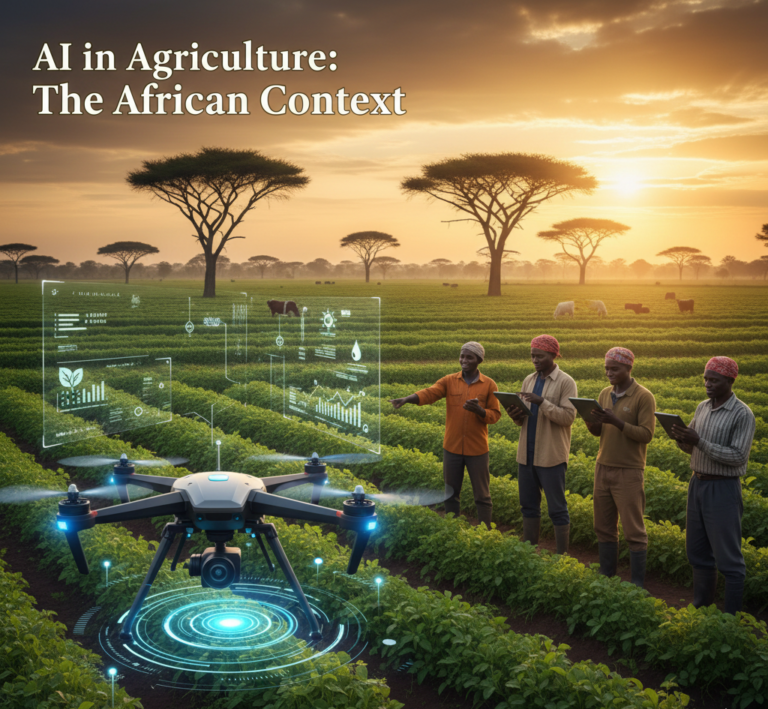
Agriculture employs approximately 60% of the African workforce, making AI-driven data systems essential for economic stability, boosting yields, and adapting to increasingly urgent climate challenges.21 This mandate has led to significant innovation in leveraging novel data sources.
Startups are rapidly addressing Africa’s severe environmental data gap by using satellite technology, drones, and machine learning.21
For example, Amini in Kenya uses AI and satellite technology to bridge environmental data gaps, while Synnefa, also in Kenya, provides climate-smart technologies that simplify farming.21
South Africa’s Aerobotics uses drones and AI for crop health monitoring to boost yields.21 The data generated by these firms which covers soil composition, hyper-local climate predictions, and unique disease patterns, is proprietary and vital for sustainable economic growth in diverse climatic regions.
Healthtech and Diagnostic Data
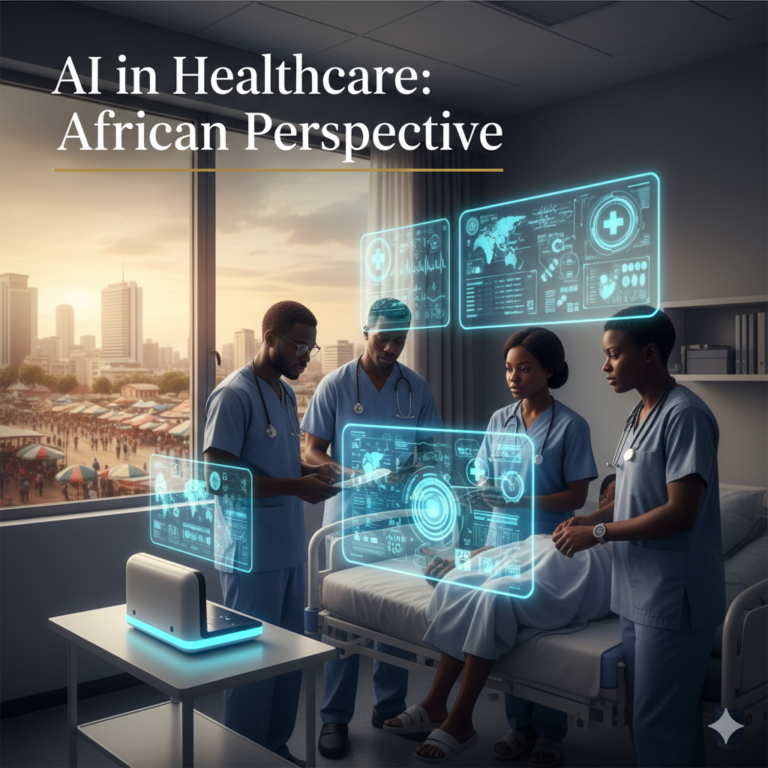
The health sector in many African nations faces acute physical infrastructure shortages, including a low hospital-to-patient ratio and lack of essential utilities.22
Emerging AI applications are circumventing these challenges by focusing on remote diagnostics, logistical efficiency, and financing innovation.
This operational rigour yields unique diagnostic data streams. Ubenwa in Nigeria uses Machine Learning (ML) to analyse infant cry patterns for early diagnosis.23
The Makerere University AI Lab in Uganda employs deep learning for malaria diagnosis from blood smears.23 Furthermore, logistical AI is transforming service delivery; Flare in Kenya uses location-based data solutions to dramatically reduce emergency response times by close to 90%.22
The integration of fintech further strengthens these data streams. Companies such as Maisha Meds utilise mobile money to lower drug costs for patients through digital reimbursement, creating powerful, integrated data systems that link transactional records with actual health outcomes.22
The necessity of building AI models that can diagnose using non-invasive, remote methods because physical infrastructure is scarce 22 ensures that the resulting IP is highly resilient and tolerant of noisy data, making it globally superior for scaling in complex environments.
The Creative Economy Data Stream
Beyond traditional technological verticals, the booming Creative and Cultural Industries (CCIs) are generating massive, high-growth consumer preference and content data.
Valued at over $50 billion 9, this sector is central to Africa’s development and global influence.9
African CCIs are increasingly merging with tech sectors such as streaming platforms, e-commerce, and immersive technologies.8
Investment in creative technology yields invaluable data on localised consumer behaviour, monetisation patterns, and willingness to pay for digital content.
This data, often rooted in rapidly urbanising cultural hubs 8, provides unparalleled insights into the consumption habits of a digitally native, rapidly maturing youth market.
Table 3: African AI Case Studies: Leveraging Unique Local Data
| Sector | Company/Initiative | Unique Local Data Leveraged | Outcome/Impact | Citation |
|---|---|---|---|---|
| Healthtech | Ubenwa (Nigeria) | Infant cry patterns (Acoustic Biomarkers) | ML analysis for early disease diagnosis | 23 |
| Agritech | Amini (Kenya) | Satellite and environmental data gap analysis | Bridging environmental data deficits for climate adaptation | 21 |
| Fintech/Health | Maisha Meds (Various) | Mobile money operations data | Lowers drug costs via digital reimbursement, bridging financing gaps | 22 |
| Logisics/Health | Flare (Kenya) | Location-based emergency response data | Reduced emergency response times by nearly 90% | 22 |
Governance, Infrastructure, and the Investment Framework
To truly capitalise on the African Data Advantage, a robust framework of trust, security, and local compute capacity is essential.
Building Trust: The Regulatory Bedrock
African governments are strategically addressing data governance to ensure stability and attract international investment.
The rapid deployment of comprehensive data protection laws signals maturity and an assurance of data sovereignty.
- Nigeria Data Protection Act, 2023 (NDPA): Signed into law in June 2023, the NDPA establishes a legal framework for the regulation of personal data, replacing prior regulations and instituting the Nigeria Data Protection Commission (NDPC).4 This ensures that data protection is enshrined as a fundamental human right, guaranteeing necessary compliance standards for both local and international partners.
- Kenya Data Protection Act, 2019: This is Kenya’s primary statute, detailing requirements for the registration of data controllers and processors, establishing procedures for complaints handling, and governing cross-border data transfer.5
These frameworks facilitate legal interoperability across the African Union (AU) member states, supporting cross-border data flows and promoting the ambition for a single digital market.3
This regulatory maturity satisfies the compliance requirements demanded by international investors, creating a trustworthy and secure environment for data-intensive operations.
The Local Compute Imperative: From Deficit to Factory
Despite the wealth of data being generated, the continent accounts for less than 1% of the world’s colocation data centre capacity.2
This capacity deficit is the single greatest inhibitor to fully leveraging the ADA. However, the regulatory maturity now plays a decisive role.
Data protection legislation often entails requirements for data localisation or imposes high compliance burdens on cross-border data transfer.24
This mandate converts the historical capacity deficit into an immediate, non-negotiable demand for high-end, compliant, local infrastructure investment.
Strategic partnerships are emerging to meet this demand. Cassava Technologies, working with The Rockefeller Foundation, is developing Africa’s first AI factory, powered by NVIDIA infrastructure.2
This initiative is designed to provide locally accessible compute capacity to developers, allowing them to focus on developing AI applications using local datasets, languages, and models.2
This establishes a robust, regulated, and local environment for Deep Tech, creating the necessary foundation for leveraging the ADA with full legal and infrastructural integrity.
Policy Recommendations for Data Stewardship
To accelerate the utility of the ADA, policy must prioritise politically neutral partnerships that respect national sovereignty to avoid foreign interference in economic and digital development.24
Furthermore, policy must actively foster data sharing by encouraging concrete use cases that demonstrate the merits of opening and sharing data resources between governments and the private sector, which is essential for scaling sophisticated AI solutions.3
Conclusion
The African Data Advantage represents a convergence of unparalleled structural opportunities: a dynamic demographic engine, financial data streams refined by mobile-first leapfrogging, unique vertical datasets generated by necessity, and a rapidly maturing regulatory environment.
Investment in the African data ecosystem is not merely tapping into an emerging market; it is financing the foundational layer for the next generation of resilient, globally applicable, and unbiased AI models.
Global investors must recognise that the inherent biases embedded in existing Western-centric AI systems can only be corrected by integrating the high-quality, high-variability, and linguistically diverse data points that only Africa can generate.
The path forward is clear: capital must be strategically deployed to close the smartphone affordability gap, to fund the expansion of local compute capacity, and to support the scaling of startups that convert Africa’s critical challenges into globally valuable, highly robust data solutions.
The AI century requires new blueprints, new data, and new centres of gravity. Africa, with its unassailable data advantage, is now demonstrably positioned to be the global engine for this profound technological transformation.
References
- Changing the narrative: Using AI tools to tell the African story | Africa Renewal, https://africarenewal.un.org/en/magazine/changing-narrative-using-ai-tools-tell-african-story
- Cassava Technologies and Rockefeller Foundation Expand Access to Artificial Intelligence Computing to African NGOs | RF, https://www.rockefellerfoundation.org/news/cassava-technologies-and-rockefeller-foundation-expand-access-to-artificial-intelligence-computing-to-african-ngos/
- Data Governance in Africa – D4D Hub, https://d4dhub.eu/initiatives/data-governance-in-africa
- The Nigeria Data Protection Act, 2023 – KPMG agentic corporate services, https://assets.kpmg.com/content/dam/kpmg/ng/pdf/the-nigeria-data-protection-act-2023.pdf
- Data protection laws in Kenya, https://www.dlapiperdataprotection.com/index.html?t=law&c=KE
- Young People’s Potential, the Key to Africa’s Sustainable Development – the United Nations, https://www.un.org/ohrlls/news/young-people%E2%80%99s-potential-key-africa%E2%80%99s-sustainable-development
- Navigating the effects of a rising youth population in Africa – Vision of Humanity, https://www.visionofhumanity.org/navigating-the-effects-of-a-rising-youth-population-in-africa/
- InsightsOut Africa explores the future of Africa’s Creative Industries – IQOQO, https://iqoqo.org/insightsout-africa-explores-the-future-of-africas-creative-industries/
- Calls to nurture Africa’s creative and cultural industries as a frontier for economic growth, https://www.afreximbank.com/calls-to-nurture-africas-creative-and-cultural-industries-as-a-frontier-for-economic-growth/
- Leapfrogging – ISS African Futures, https://futures.issafrica.org/thematic/09-leapfrog/
- Technological Leapfrogging: The Other Side of the Coin | AUDA-NEPAD, https://www.nepad.org/content/technological-leapfrogging-other-side-of-coin
- New insights on mobile internet connectivity in Sub-Saharan Africa – GSMA, https://www.gsma.com/solutions-and-impact/connectivity-for-good/mobile-for-development/blog/new-insights-on-mobile-internet-connectivity-in-sub-saharan-africa/
- The future of payments in Africa – McKinsey, https://www.mckinsey.com/industries/financial-services/our-insights/the-future-of-payments-in-africa
- Digital Payment Innovations in Sub-Saharan Africa in – IMF eLibrary, https://www.elibrary.imf.org/view/journals/087/2025/004/article-A001-en.xml
- The ‘missed opportunity’ with AI’s linguistic diversity gap – The World Economic Forum, https://www.weforum.org/stories/2024/09/ai-linguistic-diversity-gap-missed-opportunity/
- How the African Languages Lab empowers low-resource languages – Smartling, https://www.smartling.com/blog/african-languages-lab-empowers-low-resource-languages-with-ai
- AI and Language Data Flaring in Africa: Addressing the Low …, https://www.cigionline.org/publications/ai-and-language-data-flaring-in-africa-addressing-the-low-resource-challenge/
- AI4D African Languages Lab, , https://www.ai4d.ai/projects/ai4d-african-languages-lab
- GSMA and Leading African Operators Propose Minimum Requirements for Affordable 4G Smartphones | Newsroom, https://www.gsma.com/newsroom/press-release/gsma-and-leading-african-operators-propose-minimum-requirements-for-affordable-4g-smartphones/
- Africa’s Mobile Internet Market Heats Up as Demand Surges – Daba Finance, https://dabafinance.com/en/news/africas-mobile-internet-market-heats-up-as-demand-surges
- 30+ African AI Startups to Watch in 2025 – Tech Culture Africa, https://techcultureafrica.com/african-ai-startups
- Health care in Africa: Emerging technologies at play – Brookings Institution, https://www.brookings.edu/articles/health-care-in-africa-emerging-technologies-at-play/
- From Hustle to High-Tech: The AI Growth Blueprint for the New Economy – MedStartups, https://medstartups.org/from-hustle-to-high-tech-ai-growth-blueprint-new-economy
- AU Data Policy Framework – African Union, https://au.int/sites/default/files/documents/42078-doc-DATA-POLICY-FRAMEWORKS-2024-ENG-V2.pdf