Building AI That Understands Africa: The Rise of LingTec AI
FOUNDER SNAPSHOT

Abayomi Falansa
STARTUP
Lingtec.AI
STAGE
MVP • early iteration
GEOGRAPHY
Nigeria • West Africa
SECTOR
Language Services • Data Annotation
In the fluorescent glow of a co-working space, Abayomi scrolled through yet another dataset meant to train the world’s most advanced language models.
The entries captured everything from suburban American grocery runs to European idioms for mild annoyance.
What they missed, entirely was the cadence of a Yoruba market negotiation, the layered politeness of a Nairobi boda-boda haggle, or the particular rhythm of a Dakar family dinner argument.
The Origin of LingTec AI
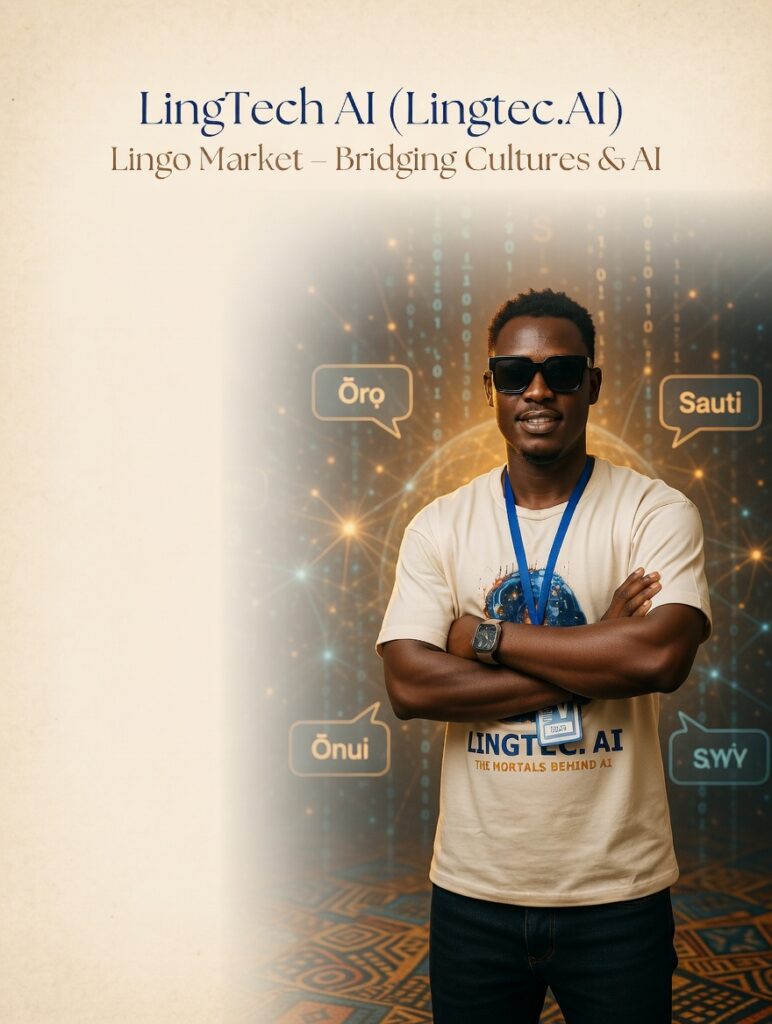
That disconnect became the seed for Lingtec.AI. Today Abayomi Falansa is its CEO and co-founder, based in Lagos with a distributed team that stretches across the country, Nigeria.
The company’s platform, Lingo Market, is part marketplace, part training ground: it links AI labs and global enterprises that need culturally precise data annotation with native speakers, linguists, and educated professionals across Africa and Asia who are hungry for remote, specialised work.
The Core Problem
The problem is as practical as it is profound.
Large language models now shape everything from customer service chatbots to medical diagnostics, yet the data that powers them remains overwhelmingly monolingual and Western in context.
Subtle cultural references, regional humor, even the way people in the Global South express uncertainty or respect get flattened or misread.
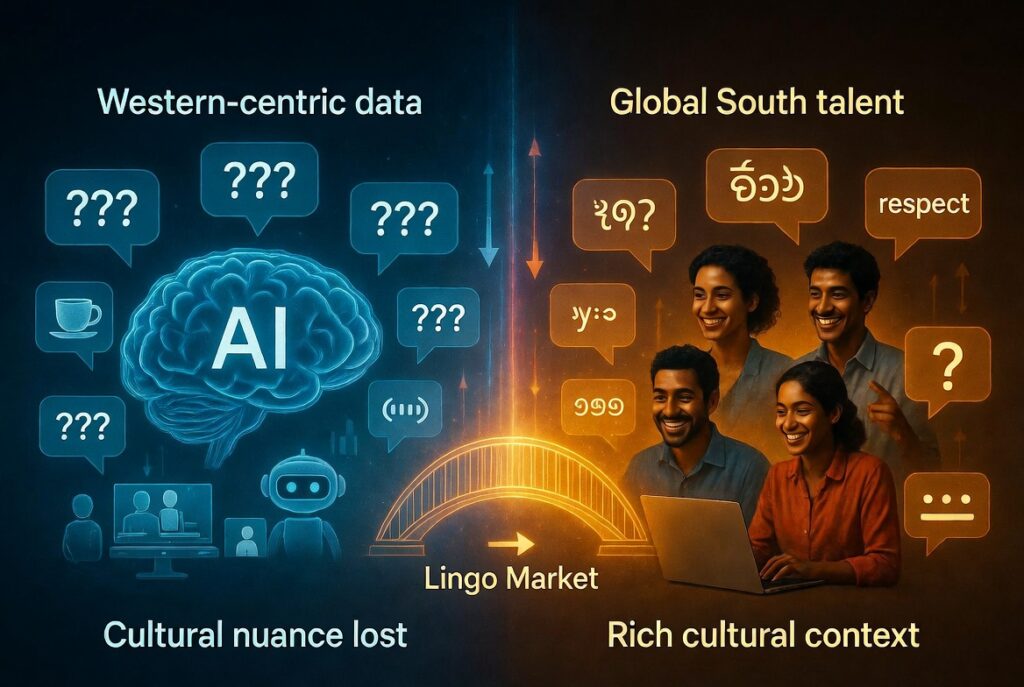
At the same time, millions of young people in Nigeria, Kenya, India, and beyond speak the very languages and understand the very contexts the models lack, while looking for dignified remote opportunities in linguistics and AI-related tasks.
Lingo Market simply connects the two sides of that equation.
From Insight to Focused Execution
Abayomi arrived at this solution through years spent as a product manager inside AI and tech companies.
He had watched teams in North America and Europe wrestle with the same complaint: culturally nuanced datasets from the Global South were scarce and difficult to source.
The realisation crystallised slowly. The next generation of AI users would not be concentrated in Silicon Valley or London; they would be logging in from Lagos traffic jams and Mumbai rooftops.

Early on, the team experimented with a broader remote-work platform, but the focus felt scattered. They pivoted sharply to data annotation alone.
The narrower lane clarified everything, the product roadmap, the value proposition, even the daily decisions about which features mattered.
What Makes Lingo Market Different
What sets Lingo Market apart is not scale for its own sake but deliberate geography and integration.
Other annotation platforms exist, yet few are built by and for emerging markets. Upwork handles general freelance gigs; specialised tools serve high-volume clients but rarely prioritise cultural context from the Global South.
Lingo Market functions as a true end-to-end marketplace:
- Clients post targeted annotation projects
- Workers apply directly
- Payments happen within the ecosystem
- The platform layers in training modules and certification pathways
This allows annotators to sharpen their skills and build verifiable profiles for bigger opportunities. The result is not just data; it is a quiet upskilling loop that keeps improving the quality of both the annotations and the annotators themselves.
The Team Behind the Platform
The company’s technical co-founder, Gabriel, brings seven years of development experience to the build, while co-founder Abisola and a small core of project managers keep quality tight across time zones.
Four project managers, some part-time and some full-time, oversee the human layer that no algorithm can replace.
Challenges and Realities
Abayomi speaks candidly about the hurdles:
- The constant need for domain-specific training
- The extra scrutiny African startups face
- The emotional toll of shifting from salaried product roles to entrepreneurship
Marketing and stakeholder engagement remain ongoing challenges.
Resilience, he has learned, is less about grand declarations and more about showing up with better data the next day.
Vision and Philosophy
As Abayomi Falansa puts it:
“Realising that the next generation of AI users would come from these regions, we set out to connect local talent with global opportunities and to build LLMs that reflect their cultures.”
Current Traction and Next Steps
Right now the platform is moving from validation to wider operation.
Projects from established international partners are being posted for annotators to claim, onboarding pipelines are live, and the team is refining the certification system that lets workers turn one gig into a stronger profile for the next.
The road ahead includes:
- Scaling the marketplace
- Deepening training resources
- Expanding the network of clients
All with a clear thesis: culturally accurate data is not a nice-to-have but a competitive necessity.
Conclusion: Building Truly Global AI
In the larger story of artificial intelligence, Abayomi’s work matters because technology does not become universal by accident.
It becomes universal when the people building it remember that Lagos, Accra, and Jakarta are not edge cases, but are the future user base.
By insisting that the Global South be present not only as consumers of AI but as its most precise trainers and cultural interpreters, LingTec AI is helping to ensure the next wave of models speaks with more than one accent.
In that quiet insistence lies a larger promise: that the machines learning from us will one day understand all of us a little better.
This article is drawn from an in-depth founder interview conducted by Afriq IQ with Abayomi Falansa, the founder and CEO of Lingtec.AI. Selected insights and observations are published here.
Ready to Ace Your Next Funding Pitch?
Join thousands of founders who have improved their pitch skills and secured funding with our automated interview simulator.