From Late Nights to Automated Ads
FOUNDER SNAPSHOT
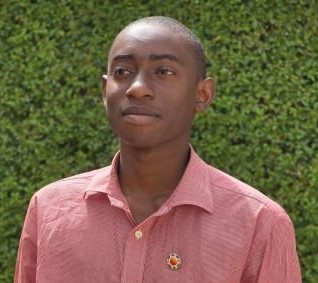
Nasirdeen Mohammed
STARTUP
Aval Web Services
STAGE
MVP • early iteration
GEOGRAPHY
Global
SECTOR
Software Development • Digital Agency
Nasirdeen was deep into another late-night coding session when the pattern became impossible to ignore.
Advertising campaigns he’d observed for many months now would often start strong, clicks rolling in, conversions ticking up but only to flatten out days later.
The Problem of Ad Fatigue
The creative hadn’t changed. The budget was still there. The audience had simply seen the same ad too many times.
What should have been momentum had turned into fatigue, and fixing it meant manual checks, paused ads, new creatives swapped in by hand.
The repetition was exhausting. A young developer who had spent years building tools to make life easier, he wondered why this particular pain point still demanded so much human babysitting.
The Origin of Aval
That frustration became the seed for Aval.
Nasirdeen Mohammed is the founder and sole developer behind the enterprise SaaS platform, whose first product, Campaignity, is an AI-driven system built to manage digital advertising campaigns end to end.
Pause. Replace. Optimise. On Autopilot.
Users connect their ad accounts, and Campaignity quietly watches in the background.
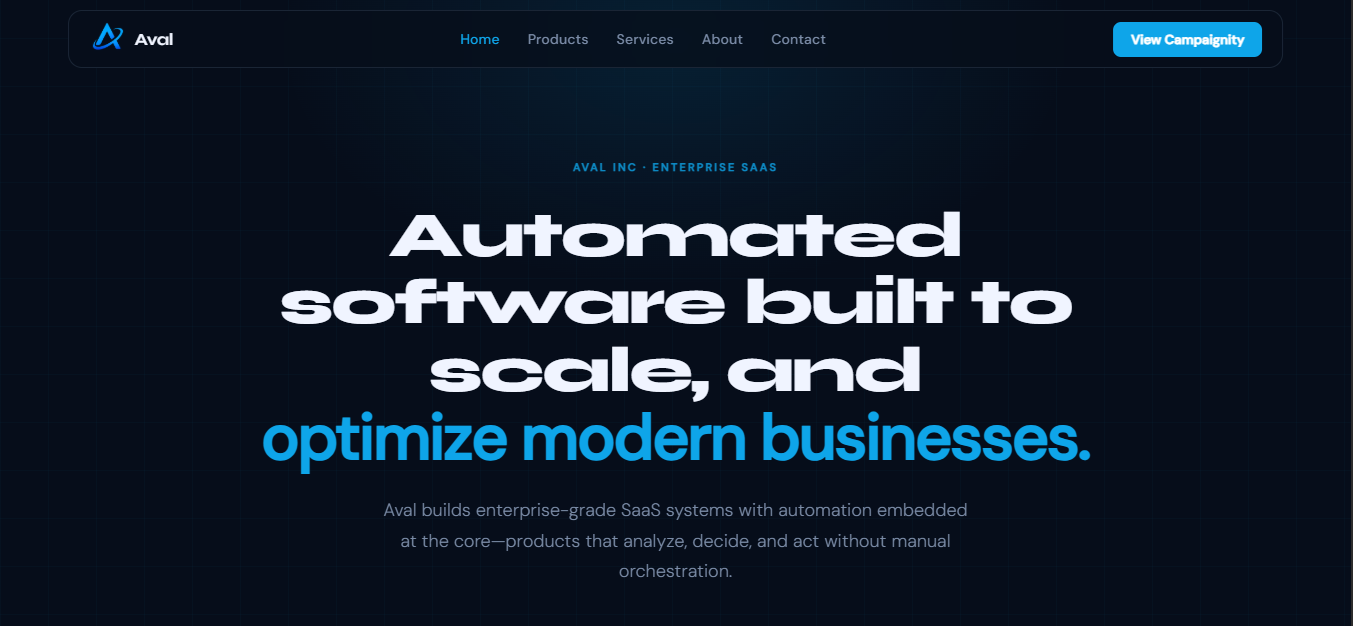
It spots anomalies, underperforming creatives, sudden drops in engagement, and doesn’t just send an alert. It can pause the tired ad and replace it with fresh creative that has already been tested for better results.
The loop is automatic: set the campaign, walk away, let the machine keep it sharp.
The Core Problem
The problem Campaignity solves is deceptively ordinary yet brutally expensive.
In digital advertising, repetition breeds indifference.
An ad that fails to convert the first few times is unlikely to succeed on the tenth viewing, yet without constant oversight, budgets keep burning on content that has already gone stale.
Marketers, especially those running multiple campaigns across platforms, spend hours each week hunting for these quiet failures.
Nasirdeen saw the waste not as an inevitable cost of doing business but as a solvable inefficiency.
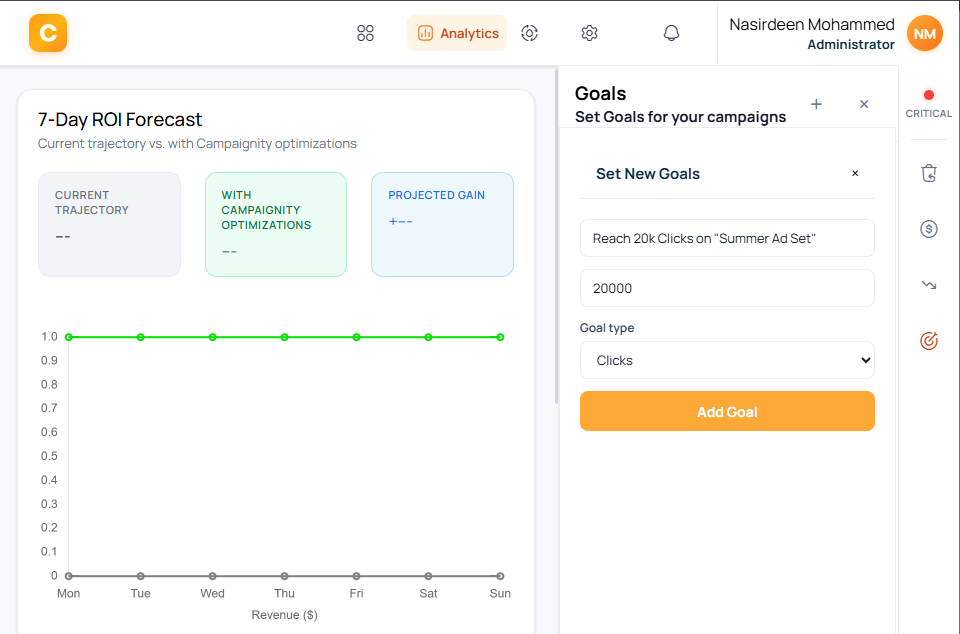
In markets where every dollar of ad spend matters, the ability to catch fatigue in real time and correct it without pulling someone away from strategy work can quietly compound into meaningful performance gains.
From Broad Vision to Focused Product
Nasirdeen’s path to this focused product was anything but linear. He began with a far more ambitious idea: a single platform called Aval that would handle everything from SEO to web development to campaign execution.
The vision was generous, give small teams one place to run their entire digital operation. But the breadth quickly revealed its limits.
Features competed for attention, development slowed, and the product risked becoming competent at many things while excelling at none.
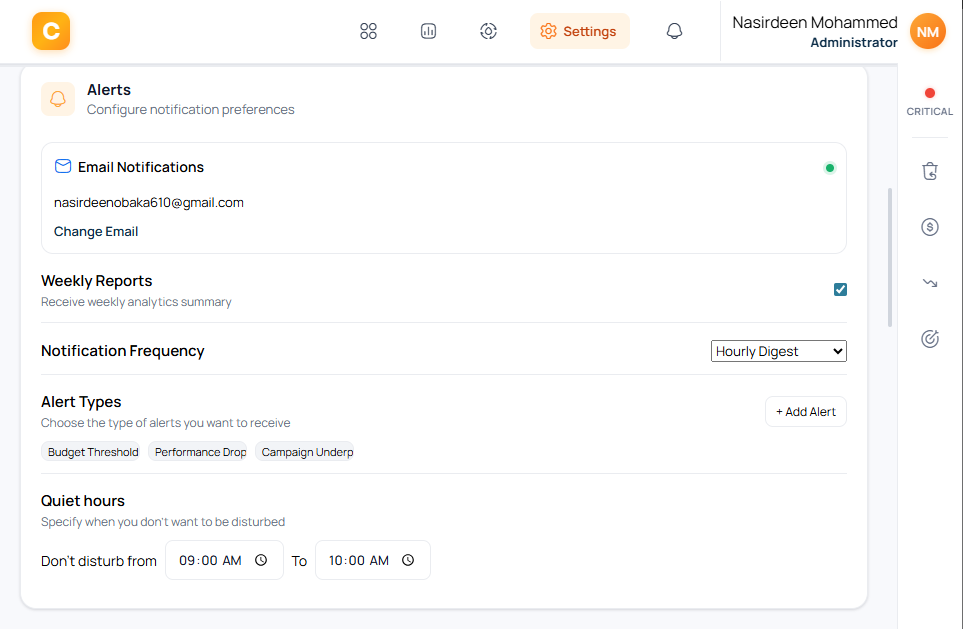
He made the hard call to strip it back. Campaign management, he realised, was the piece that felt most neglected.
Larger marketing suites talked about AI for copy generation or analytics, yet few seemed willing to own the messy, ongoing work of keeping live campaigns alive.
He narrowed his scope, rebuilt with precision, and reached what he considers the minimum viable product: a clean, automated engine that does one job exceptionally well.
What Makes Campaignity Different
What sets Campaignity apart is its refusal to stop at creation.
Tools from established names might generate promising ad copy or surface performance data, but they leave the day-to-day optimisation to the user. Nasirdeen’s system goes further.
It tests multiple creatives automatically, identifies the strongest performer, and swaps in the winner when fatigue sets in, creating a self-correcting cycle that runs with minimal intervention.
The platform was born from his own experience as a developer who values speed and reliability over breadth.
AI, he has said, has become an extension of his own hands, letting him squash bugs in minutes that once took hours.
Vision and Ambition
“I see Campaignity as the number one go-to campaign management platform in the entire world,” Nasirdeen says. “It’s actually a really grand mission, but we’re going to get there.”
Current Stage and Go-to-Market Strategy
Right now the product sits at its MVP stage, polished and ready for its first real users.
Nasirdeen is preparing an initial launch in the United States, drawn by the concentration of marketers who understand the value of automation and are prepared to pay for it.
He has been reaching out to investors, recently submitting an application to Y Combinator, and wrestling with the familiar startup tension between moving fast enough to stay ahead and moving carefully enough to get the first version right.
The competitive landscape looms, larger players with deeper pockets could, in theory, replicate pieces of what he has built but he treats that pressure as fuel rather than fear. His response has always been the same: keep refining the product.
Future Direction
Looking ahead, he envisions Aval growing into a suite of tools that continue to strip away repetitive work across marketing operations.
Campaignity remains the flagship, the one he believes can become the default choice for anyone running sustained ad efforts at scale.
The timeline is ambitious five years, ten years, however long it takes but the direction is steady.
Conclusion: Building Through Focus
In the global conversation about AI and startups, stories like Nasirdeen Mohammed’s rarely make the front page.
Founders building quietly from outside the usual hubs often go unseen, even when their solutions address universal frustrations.
Yet the quiet determination to take a broad idea, carve away everything unnecessary, and double down on one genuinely painful problem is exactly how lasting tools are born.
Nasirdeen’s work is a reminder that the most valuable innovations frequently start not with grand declarations but with a developer staring at the same screen, noticing the same small inefficiency, and refusing to accept that it has to stay that way.
This article is drawn from an in-depth founder interview conducted by Afriq IQ with Nasirdeen Mohammed, the founder and CEO of Aval Web Services. Selected insights and observations are published here.
Ready to Ace Your Next Funding Pitch?
Join thousands of founders who have improved their pitch skills and secured funding with our automated interview simulator.