

What AgriHyphen AI Reveals About Building Agricultural Infrastructure in Burundi
FOUNDER SNAPSHOT
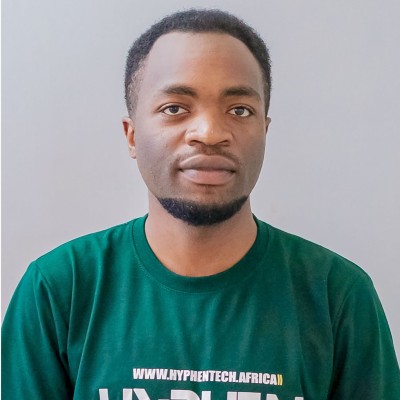
Elie Bubuya
STARTUP
STAGE
Between MVP and pilot
GEOGRAPHY
Burundi and East Africa
SECTOR
AgriTech
Where the Problem Lives
According to International Fund for Agricultural Development (IFAD), more than 80% of Burundi’s population are farmers.
That figure sits quietly in most development statistics without doing the work it should.
What that means is, when a crop disease sweeps through a region, it does not just reduce agricultural output. It reduces the income of most of the country simultaneously.
Therefore, any false diagnosis or a farmer guessing wrong about which chemical to buy, could have huge financial implications which can lead to cascading losses: the cost of the wrong chemical, the environmental damage from applying it, and the crop that dies anyway.
The founder of Agrihyphen AI, Elie Bubuya watched this problem from childhood. He describes it simply:
Farmers who cannot afford to hire an agronomist guess at diagnoses using visual comparisons. If they guess right, they fix the problem. If they guess wrong, they lose money, damage the environment, and lose the crop too.
He did not want to copy a Western solution and apply it to Africa. He wanted to understand the specific problem first and build toward that.
The specific problem was a 40% crop waste rate across sub-Saharan Africa, with some estimates putting it even higher at 50% when disease is the cause (FAO, Food and Agricultural Organisation of the United Nations).
It is important to bear in mind that this statistic is not abstract to a founder from Burundi but also a daily reality of the majority of the people around him.
The Core Problem
The deeper issue behind AgriHyphen AI is not plant disease. It is the infrastructure gap that makes plant disease so costly.
When a disease appears on a crop in a well-resourced agricultural environment, a farmer has options such as:
- Being able to a specialist.
- Being able to look it up in a system designed for their region.
- Being able to access government agricultural extension services.
The information required to make a correct diagnosis does certainly exists and is accessible.
However, in rural Burundi and across much of sub-Saharan Africa, none of those options reliably exist.
The specialist costs money that the farmer does not have. The databases and apps that do exist were built for different crops, different climates, and different disease profiles.
The government extension services are stretched. And the diseases attacking crops in East and Central Africa are not necessarily the same ones that a model trained primarily on Western or Asian agricultural data has seen.
The result is a specific and recurring failure. Farmers are making diagnostic guesses with real consequences. The technology to support better decisions exists globally.
However, these have simply not been made affordable, accessible, or contextually relevant for the farmers who most need it.
AgriHyphen AI is an attempt to close that gap.
It is built to run on a smartphone, support multiple local languages, and provide recommendations that a farmer can actually act on without hiring anyone.
The Strategic Decision Layer
The most important technical decision the founder made was not what to build. It was how to make it small enough to work.
AI models require significant compute to train and to run. The founder is building from Burundi, bootstrapping, with limited access to cloud infrastructure.
When he trains a model, he cannot afford to deploy the full weight of it.
He uses a technique called distillation, taking a large, trained model and compressing its knowledge into a smaller, lighter version that can be deployed at lower cost and run faster on devices with limited processing power.
That constraint is also the product insight.
In remote agricultural areas across Africa, internet connectivity is unreliable.
A model that requires a fast, stable connection to return a diagnosis is a model that fails exactly where it is most needed, in the field, far from infrastructure, at the moment a farmer is standing in front of a diseased plant.
The offline functionality the team is working toward is not a nice-to-have feature. Rather, it is the product requirement that determines whether AgriHyphen AI is actually usable by the farmers it was built for.
The decision by the founder to use the free tier as a data collection mechanism is also strategically sound.
Every diagnosis a farmer submits, right or wrong, is a labelled training example from the specific region and crop context the model needs to improve.
The users are paying with their data. The product improves as it scales. The competitive moat grows because the dataset being built is unique.
No competitor can buy or replicate data that was collected organically from farmers in Burundi, Rwanda, and East Africa over years of real field use.
Ecosystem Context
Burundi sits in a part of Africa that almost never appears in tech ecosystem coverage.
When investors and media discuss African startups, the conversation defaults to Nigeria, Kenya, and South Africa. Sometimes Ghana or Egypt.
Burundi does not appear on those maps. There is no established startup funding network. There is no equivalent of the Lagos or Nairobi tech hubs providing co-working spaces, accelerator programmes, and investor introductions.
The founder describes learning how to seek investment as a process he is figuring out largely alone, because it is uncommon in his environment.
That invisibility creates a specific kind of founder. One who builds without the scaffolding of an ecosystem. No warm introductions to angels.
No accelerator programme covering the basics of fundraising. No peer community of founders who went through the same process a year ahead.
The learning curve is steeper, and the mistakes are costlier because there are fewer people who have made them before and documented what happened.
The internet infrastructure problem is the same problem that every founder in this conversation has named.
For AgriHyphen AI, this is not just a background operational challenge.
It is the central product design constraint. A computer vision model for agriculture that cannot function without reliable internet is a product that excludes most of its own target users from day one.
The compute cost problem is equally specific. Training AI models costs money in proportion to the complexity and volume of what you are training on.
The founder is using model distillation to stay within his budget. That produces models that work but perform below what full compute access would allow. He knows this and names it directly.
The performance gap is real, and it is a function of resource constraint, not technical capability.
The competitive observation deserves particular attention.
When the founder added local language support to differentiate AgriHyphen AI, a competitor from Kenya did the same within one to two months.
In a space where differentiation through features is quickly replicated, the sustainable advantage has to come from data. Specifically, from proprietary training data collected in regions that competitors have not prioritised.
The offline functionality push is the same logic. If AgriHyphen AI is the only product that works without internet in remote Burundian fields, then it could it occupy a position that cannot be replicated quickly.
Observed Patterns
The Paris AI Action Summit recognition is a significant credibility signal worth examining carefully.
The French government, through its embassy in Burundi, identified the founder as an AI pioneer from Africa and brought him to a summit that included Sam Altman of Open AI, Google leadership, and heads of state.
The founder describes the experience as validating. He came back knowing that what he is building is the right direction, even if the scale is not yet there.
That external recognition from a major institutional actor serves a specific function beyond morale.
It demonstrates that the work is legible to sophisticated global observers, not just within the regional context where it was built.
That legibility is important for the funding conversations that will eventually need to happen.
The agronomist validation structure in the team is a signal of methodological rigour that most AI agricultural startups miss.
Building a model to identify plant diseases without agronomists validating the training data and the recommendations is technically possible.
It is also likely to produce dangerous errors in a context where a wrong recommendation leads to real economic harm.
The fact that two agronomists are embedded in the core team, not brought in occasionally for review but as permanent members, suggests the founder understands that biological accuracy is a product quality requirement, not just a nice addition.
The dual-product strategy is also worth noting with context.
Running AgriHyphen AI and Cosebu simultaneously as a team of six while bootstrapping is an operational stretch that will only become more acute as both products develop.
Open Variables
The offline functionality is the most consequential near-term product variable.
The founder identifies internet access as one of the two main complaints from users. The other is breadth of crop and disease coverage.
Both are valid.
But the internet dependency is more fundamental. A product that only works in areas with reliable connectivity is a product that systematically excludes the poorest and most remote farmers, who are precisely the ones with the least access to alternative diagnosis methods.
Until offline functionality is delivered, the actual addressable market for AgriHyphen AI could be significantly smaller than the total problem it is trying to solve.
The data advantage thesis is compelling but not yet validated at scale.
The strategy of using free users to collect locally relevant training data is correct in direction.
At approximately 300 testers, the data advantage over a well-funded competitor who decided to prioritise this region is not yet decisive.
The advantage compounds with time and scale. Whether the founder can reach the volume where that advantage becomes genuinely defensible before a better-resourced competitor enters the space is an open timing question.
The founder is bootstrapping while applying massively for grants and investment.
He is doing this in an ecosystem where investment activity is genuinely rare and where he has fewer network connections to accelerate the process than a founder in Lagos or Nairobi would have.
The pace of product development is constrained by this reality. The data collection strategy, the offline development, the expansion to more crops and diseases, all require capital that is not yet secured.
Why This Matters
For founders building agricultural AI across Africa, this case makes a specific and underappreciated argument.
The competitive moat in this space is not the model architecture. It is the data. Models can be replicated but training data collected from specific regions, crops, and disease profiles over years of real use cannot be.
Founders who understand this and build their data collection strategy deliberately from the start are building something that improves continuously with every user interaction.
For investors, Burundi represents the kind of gap in the African tech investment landscape that impact-oriented funds should be examining.
The agricultural problem is real and large. The founder has demonstrated international recognition for the technical work. The market is entirely underserved by existing investment activity.
The risk profile is genuine but the absence of competition from well-funded players is a function of neglect, not of the market being too small.
For ecosystem operators, the Burundi case is a reminder that the African tech conversation is systematically under-representing the continent.
Burundi, like dozens of other countries across Central and East Africa, has technically capable founders working on real problems with minimal support infrastructure.
The founders who emerge from these environments tend to be exceptionally resourceful precisely because they have built without scaffolding.
The question is whether the ecosystem will find them before they run out of runway.
Final Strategic Takeaway
The founder went to Paris and sat in a room with some of the most powerful figures in global technology.
He came back to Burundi to keep building.
That is not an insignificant decision. It would have been reasonable, perhaps even logical, to use the visibility and connections from that moment to pursue opportunities elsewhere.
He did not. He went back to the problem he started with. The farmers. The diseases. The false diagnoses and the losses that follow.
There is a specific kind of founder who measures success by proximity to the problem rather than distance from it.
The ones who stay because leaving would feel like abandoning the reason they started.
Elie Bubuya is building from Burundi not because he has no other options. He is building from Burundi because that is where the problem is.
In agricultural technology, where the most important data comes from the field and the most important users are the ones furthest from infrastructure, that proximity is not a limitation.
It is the advantage.
This article is drawn from an in-depth founder interview conducted by Afriq IQ with Elie Bubuya, CEO of Hyphen Tech. Selected insights and observations are published here.
Ready to Ace Your Next Funding Pitch?
Join thousands of founders who have improved their pitch skills and secured funding with our automated interview simulator.