What DALA Innovation’s Architecture Reveals About Building Deep Tech in Emerging Markets
FOUNDER SNAPSHOT
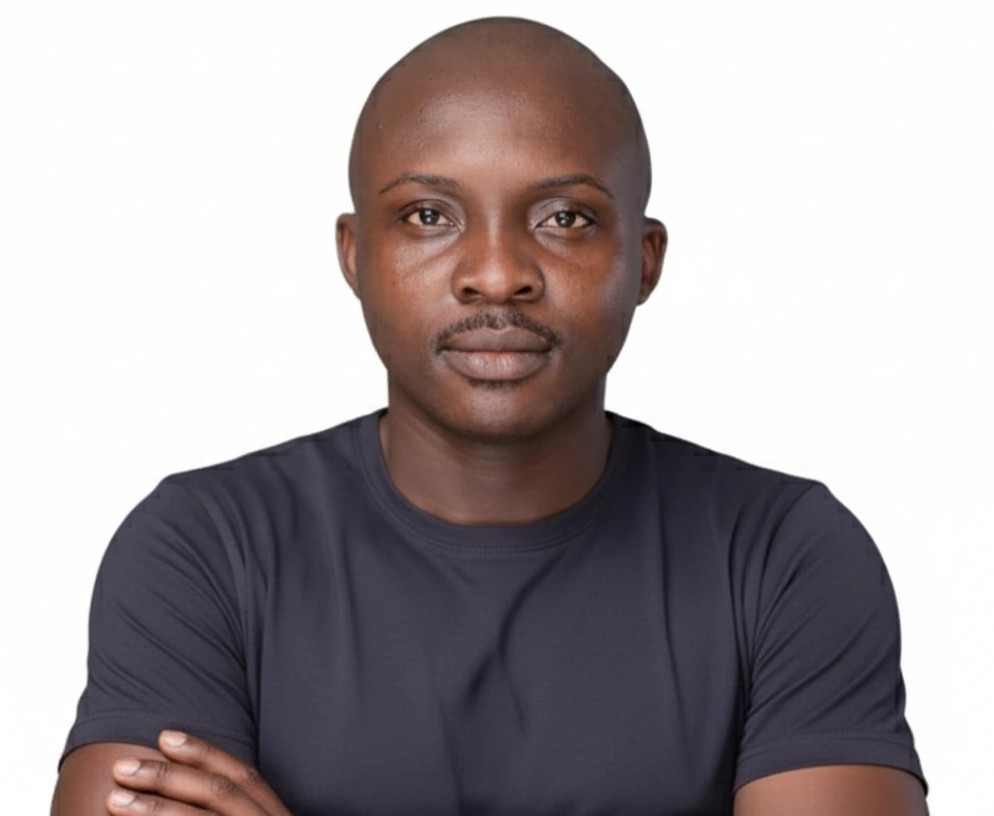
Bawo Williams
STARTUP
DALA Innovation
STAGE
MVP development • Pre-revenue
GEOGRAPHY
Nigeria • West Africa
SECTOR
Multi-AI ecosystem
The Core Problem
The problem DALA Innovation is addressing is not translation. It is the absence of data infrastructure itself.
The observation driving the company’s founding thesis is precise: one of the few sectors in Nigeria with structured data is finance.
That structural advantage which is as a result of decades of transaction records, credit histories, regulatory frameworks, and digitised institutional relationships is the primary reason Nigeria’s fintech sector has produced unicorns while healthcare and language sectors have produced almost nothing at scale.
The founder’s framing of this is worth examining carefully. He is not building a product for today’s market. He is building the data layer that will enable other products to exist in the future.
Over 500 Nigerian languages are spoken across the country. Fewer than 5% have been digitised. More than 12 have already gone extinct.
For Indigenous language AI models to reach the generative capability of widely deployed language tools, though there is no fixed threshold, a strong performance can emerge with 50,000–200,000 high-quality samples.
Dala Translate long-term target is 1.5 million data points per language
The founder reports approximately 15,000–25,000 data points per language across five languages support early models.
This represents an early but functional dataset, sufficient for proof-of-concept models and initial deployments, with clear performance gains expected as data quality, diversity, and scale increase.
That gap is not a product failure. It is a structural documentation of how far the infrastructure-building work has to go.
In healthcare, the parallel problem is equally specific. Preventable illness which is the kind signalled by persistent symptoms that busy people routinely ignore has no early warning infrastructure in Nigeria.
Before someone collapses from high blood pressure, the signs were present. They were not monitored, aggregated, or interpreted.
DALA Care AI is attempting to build the monitoring and prediction layer that makes that signal capture possible through wearables and continuous data collection.
Both products share the same foundational logic. The sector is broken not because the technology does not exist, but because the data layer required to make the technology useful has never been built.
The Strategic Decision Layer
More interesting than the product portfolio itself was the decision to build an ecosystem rather than a single focused product.
DALA Translate, DALA Care AI, DALA Pay, Mo-DALA and DALA EdTech are structurally distinct businesses operating under a single innovation umbrella.
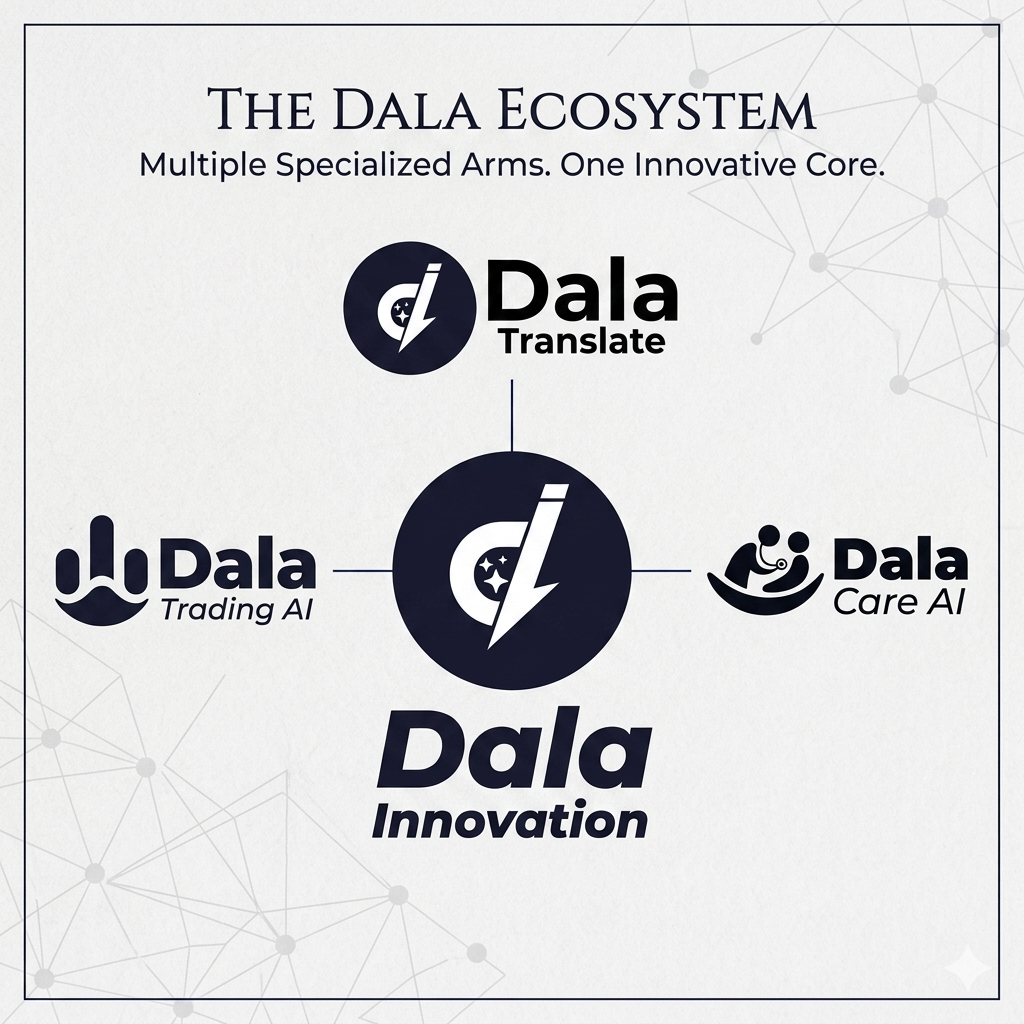
They have separate teams, separate development timelines, and separate market entry requirements.
The founder’s explicit choice to run them in parallel rather than sequentially reflects a specific strategic thesis: that the data infrastructure problem in Nigeria is too large and too urgent for a single-product approach.
That thesis may be contestable. Nevertheless, parallel development across several capital-intensive, research-grade products under pre-revenue conditions is a rare configuration for an early-stage company.
Discussions with the founder does present a stronger signal though, and this is tied to its robust recruitment architecture.
The founder has conducted over 300 LinkedIn conversations across 21 months to build a 20-person team.
The explicit selection criteria were not credentials or experience. They were long-term vision alignment and execution reliability under constraint.
He describes discovering that the most capable machine learning contributors were junior engineers who delivered in two weeks what senior candidates with stronger profiles could not deliver in three months.
That recruitment philosophy which suggests prioritising execution evidence over credential signalling, produced a team that has remained stable for 21 months in conditions where electricity outages lasting weeks are a routine operational reality.
In a market where infrastructure instability makes remote technical work genuinely difficult, team retention over 21 months without much revenue is itself a data point.
The patent strategy is also worth noting.
The founder reports two patents are acknowledged by Nigerian intellectual property authorities with a further eight additional patents in preparation.
For a pre-revenue AI company building in a sector with no established commercial reference points, patents serve a specific purpose beyond legal protection.
Patents create a credibility signal for institutional partners such as hospitals, linguistic custodians, development banks, etc who need assurance that what DALA is building is proprietary before committing to partnership.
Therefore, the patent architecture is not a monetisation strategy. It is a trust architecture for institutional market entry.
Ecosystem Context
What DALA Innovation’s funding journey reveals about the capital environment for deep tech in Nigeria is that programme selection criteria systematically disadvantage pre-revenue infrastructure companies in favour of businesses with observable traction.
The founder attended and pitched at multiple programmes namely, Orange Corners, Development Bank of Nigeria entrepreneurship programme to name a few.
A consistent pattern was observed. Companies with existing revenue in agriculture, food processing, and waste management were selected over pre-revenue tech companies with stronger long-term potential.
His own observation was candid: other companies with genuine traction were also not selected.
The problem of funding a startup is not primarily a quality problem. Instead, it is a selection framework problem.
Nigerian startup support programmes are largely calibrated to evaluate businesses with existing commercial activity.
Deep tech infrastructure companies whose value is in the data and model development they are undertaking rather than current revenue, are structurally misaligned with those evaluation frameworks.
The founder’s description of receiving encouragement and applause at pitching events followed by non-selection is a recurring pattern in this space.
Despite these limitations, it is also worth mentioning that the founder had in the past received some funding from the Tony Elumelu Foundation Entrepreneurship Programme for their previous startup, Waltor Energy Corp (not related to Dala Innovation).
This funding was only successful after 4 successive applications to the programme.
For investors and DFIs evaluating the Nigerian deep tech ecosystem, the pattern of lack of funding capital carries a specific implication.
The gap between the quality of founders building infrastructure-grade AI and the availability of capital instruments designed to support that work remains wide.
Companies like DALA Innovation exist in a category that grant programmes may not have been designed to fund.
Although further forensic investigations are required, it could also mean that early-stage Venture Capital has not yet developed sufficient frameworks for evaluation in that AI category.
The visa denial and post-graduate school rejection that preceded the founding of DALA is also worth noting as ecosystem context.
The founder explicitly identifies his inability to access international research infrastructure such as battery technology research programmes and postgraduate study abroad as the proximate cause of founding DALA Innovation domestically rather than pursuing research internationally.
That dynamic which indicates a redirection of capable technical founders into domestic entrepreneurship due to access barriers rather than deliberate career choice, is a recurring pattern across Nigerian deep tech.
It produces a specific kind of founder: one motivated by proving that what cannot be built through international institutional channels can be built locally.
That motivation tends to produce unusual persistence.
It also tends to produce companies that operate without the international network effects that accelerate early commercial traction.
Observable Signals
There is strong evidence of founder-problem proximity across its product lines and offerings.
The language preservation mission is personal. The founder identifies as Itsekiri (a Western Niger Delta region, primarily within Delta and Edo states in Nigeria) and explicitly states that no Itsekiri text-to-text model existed before DALA built one.
The healthcare prediction mission emerged from a specific observation about symptom neglect rather than market sizing.
Both origin points suggest the problem definition is grounded in lived context rather than trend analysis.
The recruitment strategy demonstrates unusually disciplined thinking about execution quality versus credential quality.
The discovery that junior engineers consistently outperformed senior candidates with stronger profiles and the willingness to act on that discovery by restructuring the team around execution evidence rather than CV signalling reflects a specific kind of empirical judgment that is not common at this stage.
It also produced a team that has sustained itself for 21 months without revenue under genuinely difficult infrastructure conditions.
The patent strategy signals institutional thinking ahead of commercial traction.
Filing 2 patents across DALA Innovation product lines at pre-revenue stage is an unusual resource allocation decision.
It implies the founder is building for institutional partnership entry — hospitals, government bodies, linguistic authorities rather than consumer adoption.
That sequencing is appropriate for the specific market structure DALA is navigating.
Less visible in the public narrative is the commercial bridge between current infrastructure development and revenue generation.
The data gap for language models which is currently at about 1% of required training data and the hospital partnership dependency for healthcare beta testing both suggest the pathway to commercial scale requires institutional commitments that have not yet been secured.
The quality of those institutional conversations and their current status is not yet apparent from available evidence.
Open Variables
The central open variable is product prioritisation under capital constraint.
Running several structurally distinct AI product lines in parallel with each requiring significant data development, clinical validation, and institutional partnership under pre-revenue conditions is rare.
However, it’s not yet in the public narrative how the founder and his team do currently navigate the potential resource allocation challenge that the AI infrastructure of this kind poses.
Whether DALA Care AI or DALA Translate is the primary capital deployment priority, and what the sequencing logic is between them, is not yet clearly visible.
For institutional readers evaluating funding proposals, this distinction may matter significantly.
The second open variable is the hospital partnership pathway for DALA Care AI.
The MVP (most viable product) is described as deployment-ready on the backend. The constraint to beta testing is hospital partnership.
How those partnerships are still being pursued is not yet in the public narrative.
Although, the clinical validation step is the most consequential near-term milestone for the healthcare product, and its progress will determine how realistic it is to meet its milestone in terms of scaling.
The data acquisition strategy for DALA Translate presents a third open variable.
Moving from approximately 15,000 to 25, 000 data points per language to the 1.5 million required for generative model performance requires either significant capital investment or a partnership model with linguistic custodians and community contributors that scales data collection without proportional cost scaling.
The founder references partnerships with linguistic authorities and traditional rulers as the intended mechanism.
Whether that partnership model produces data at the volume and quality required and on what timeline, is a structural question that the language preservation mission depends on answering.
Finally, the funding strategy itself remains unresolved.
Multiple pitch programme participations but only a few have been successful.
Whether the next capital event will come through international impact investment, diaspora funding, academic research partnerships, or a specific programme aligned to deep tech infrastructure is not yet apparent.
The funding gap is the founder’s own stated primary constraint. How that constraint gets resolved will determine the pace of everything else.
Why This Matters
For founders building in deep tech and AI infrastructure in African markets, this case surfaces a structural tension that is rarely named directly.
The most important foundational work, that is, building the data layers that will enable an entire sector’s future might be hardest work to fund, because it does not yet produce commercial traction in the timeframes that most capital instruments are calibrated to evaluate.
DALA Innovation is operating in that gap.
For investors, the ecosystem architecture is worth examining beyond its surface complexity.
For accelerators and DFIs, the programme selection pattern identified by the founder deserves institutional attention.
If Nigerian startup programmes are systematically selecting revenue-generating agribusiness and food processing companies over pre-revenue deep tech infrastructure builders, the programmes are optimising for visible traction rather than long-term ecosystem value.
The consequence is that the most important foundational work gets done by founders who persist without support rather than with it.
For ecosystem operators and policymakers, the connection between international research access barriers and domestic deep tech entrepreneurship is a pattern worth studying deliberately.
Some of the founders building AI infrastructure in Nigeria may be doing so because they could not access the international research environments where that work would otherwise be conducted.
That redirection produces innovation.
Final Strategic Takeaway
The most instructive moment in this case is not the patent portfolio or the 20-person team sustained without revenue.
It is the founder’s description of one of a few sectors in Nigeria with structured data which is the finance sector, and his identification of that structure as the primary cause of fintech’s disproportionate success.
That observation reframes the entire DALA Innovation project.
This is not a company trying to build AI products in difficult markets. It is a company trying to build the preconditions that would make AI products possible in those markets.
That distinction is significant. Products can be copied. But, infrastructure, once built, becomes the environment that subsequent products depend on.
The challenge is that infrastructure-building timelines and capital instrument timelines rarely align.
The work that matters most to a sector’s long-term development is frequently the work that current funding mechanisms might be least equipped to support.
DALA Innovation is building in that gap but deliberately, patiently, and with an unusually clear-eyed understanding of why that gap exists.
Whether the capital environment evolves to meet that work before the team’s capacity to sustain itself without it is exhausted, might also be the open question that matters most.
This article is drawn from an in-depth founder interview conducted by Afriq IQ with Bawo Williams (Founder and CEO) of DALA Innovation. Selected insights and observations are published here.
Ready to Ace Your Next Funding Pitch?
Join thousands of founders who have improved their pitch skills and secured funding with our automated interview simulator.