MajestEYE Is Building the Infrastructure for a Data-Driven Future
FOUNDER SNAPSHOT
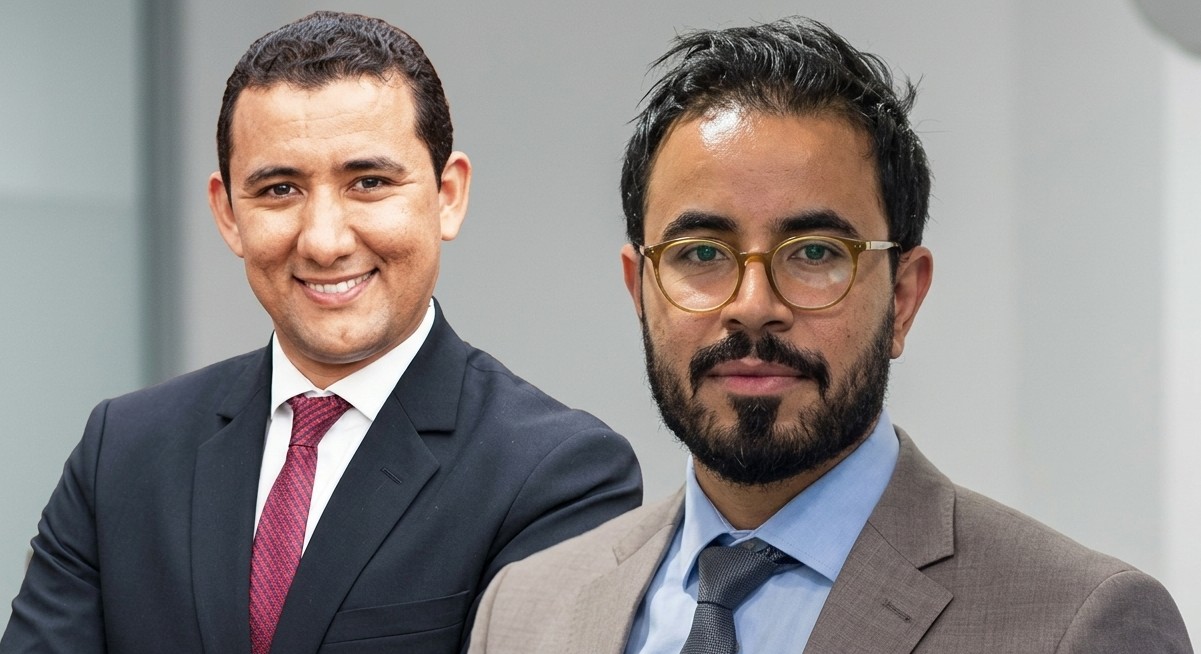
Jihed Hannachi and Rabie Saidi
STARTUP
MajestEYE
STAGE
Revenue generating, bootstrapped
GEOGRAPHY
Tunisia
SECTOR
Enterprise Tech
Background
MajestEYE is largely a data governance and data management technology company. Its proposition spans the data value chain which ranges from understanding and cataloguing data totransformation, analytics and the deployment of data products.
Its broader thesis in the AI era is that:
Before an organisation can become AI-driven, it needs to become data-ready.
Jihed Hannachi, co-founder of MajestEYE, leads the business-development side of the company.
Before MajestEYE, Hannachi spent roughly a decade in consulting across Tunisia, North Africa and Europe, including at Ernst & Young.
These experiences eventually led him towards building technology rather than continuing to provide advice without owning the underlying tools.
His technical counterpart is Rabie Saidi, MajestEYE’s co-founder and technology lead. Rabie spent much of his career in academia before moving into entrepreneurship and taking responsibility for the technical side of the company.
The Core Problem
The current AI conversation tends to focus on models, GPUs and compute but MajestEYE are focused on something less visible.
And that is, the data underneath all of it.
Organisations frequently possess large quantities of data without having the structure, governance or context required to turn that data into something economically useful.
Data may exist across operational systems, individual computers, databases and other disconnected environments and usually bares unformalised business knowledge that makes the heart of the company’s
Simply having more data does not automatically make an organisation data-driven.
MajestEYE’s proposition is therefore built around helping organisations understand what data they have, where it sits, how it should be governed and how it can eventually be transformed into usable data products.
The Strategic Decision Layer
MajestEYE is not positioning itself as another standalone analytics tool.
Instead of competing separately in data transformation, visualisation, predictive analytics, governance or management, it connects these functions into a broader data journey.
The underlying idea is to close the gap between knowing what should be done with data and actually building the systems to do it.
For instance, through its data cataloguing, it captures metadata around datasets, it provides a reference point for how data should be handled, what is its substantive business meaning, how these relate to the business concepts the organisation coined and which sensitive data needs to be masked, encrypted or restricted.
This becomes increasingly important as organisations adopt AI: the rise of generative AI has not created MajestEYE’s data thesis, it made it even more urgent.
The Ecosystem Context
MajestEYE operates within an African data ecosystem where organisations are increasingly under pressure to become data-driven, but often work with fragmented infrastructure, legacy systems and limited internal data capabilities.
At the same time, regulators are placing greater emphasis on data governance and protection, creating a shift from treating governance as consulting advice to requiring actual technology and systems to support and sustain it.
This creates a particular opportunity around data sovereignty.
Banks, governments and other regulated organisations may need to retain greater control over where sensitive data is stored and processed, making on-premise or locally controlled infrastructure important in most markets.
MajestEYE therefore sits within a broader ecosystem shift. African organisations are not simply looking for AI tools, but increasingly need the governance, infrastructure and data-management foundations required to use them responsibly.
Observed Signals
MajestEYE is not trying to compete with foundation-model companies.
It is working on the infrastructure organisations need before and around AI deployment.
The company has stayed close to its original thesis
MajestEYE has retained its focus on data governance and management while adapting to the technological shifts that have occurred since its launch.
Implementation is part of the product
The company combines software with hands-on implementation, rather than treating implementation as a separate consulting exercise.
Africa-specific constraints influence the architecture
Fragmented infrastructure, regulatory requirements and data scarcity are not peripheral considerations. They shape the product itself.
Open Variables
The largest question is now scale.
MajestEYE has spent years developing a broad data-management proposition, and using it to generate working descriptive and intelligent data products that provide bottom line value for its clients: Banks, Insurance companies and Government organisations in its organic growth market, North Africa.
The next phase is translating that value proposition through its repeatable methodology and scalable technology across more markets.
There is also a positioning challenge.
The platform sits across several categories as mentioned previously.
That breadth can strengthen the proposition for customers who want one integrated system, but may also present a categorisation challenge.
MajestEYE answer to that was by making its platform modular and interoperable with other technologies that clients might have already invested in.
The other variable is the relationship between African sovereignty and international expansion.
MajestEYE wants to take its technology beyond Africa, and believes its differentiation, which is partly rooted in the very constraints that distinguish African markets, will give it an edge for growth beyond the continent as well.
In a geopolitical environment where Technology is regarded as a potential leverage, sovereignty is becoming a must have. In a rush towards hyperscalers and increasingly complex and opaque modules, the nimble and natively explainable AI technology of MajestEYE becomes a unique selling point.
How much of that advantage travels internationally remains an open question at this stage of its developement.
Why This Matters
The AI infrastructure conversation is increasingly dominated by compute, GPUs, Data centres, Foundation models and Inference.
But there is another layer underneath all of this and that is called Data Readiness.
An organisation cannot reliably build intelligent systems from data it cannot locate, understand, govern or trust.
MajestEYE is building from that seemingly less glamorous part of the technology up to the intelligent, business-value generating applications.
For African organisations, the proposition has an additional dimension: data governance intersects with sovereignty, regulation, infrastructure ownership and the question of where intellectual property, the business knowledge of African organisations and the economic value underneath it ultimately reside.
That makes MajestEYE more than a conventional data technology company.
Its longer-term proposition is closer to a data infrastructure layer for organisations that want to turn fragmented information into governed, usable and eventually intelligent assets.
A layer Africa desperately needs to master to build its own economic future.
Final Strategic Takeaway
The most interesting thing about MajestEYE may be that it started building its thesis before AI made the problem fashionable.
Its founders are not arguing that every organisation needs another AI application.
They are arguing that organisations need to understand their data first.
Because the next generation of AI companies may compete on models and compute.
But for the organisations actually trying to deploy those systems, another question comes first:
Can they trust, govern and control the data underneath them?
That is the infrastructure layer MajestEYE has been building since its inception.
This article is drawn from an in-depth founder interview conducted by Afriq IQ with Jihed Hannachi (Co-Founder and CCO) and Rabie Saidi (Co-Founder and CTO) of MajestEYE . Selected insights and observations are published here.
Ready to Ace Your Next Funding Pitch?
Join thousands of founders who have improved their pitch skills and secured funding with our automated interview simulator.